
Another year is about to come to an end and it is time to take a look at what has happened this year in the world of odour management. As those of you who have been following us for many years already know, we traditionally dedicate a small break in our daily to-do list to make this summary, which also comes in handy for us to take a look back and see where to focus our efforts for the coming year.
Here is our compilation of news that has happened this year in this area of ours. These might not be the most important news for other odour experts. In fact, in the comments section of this article, you can always include any other news that you think has been relevant this year, and have somehow escaped us. For example, on the topic of odour regulations and standards, we follow several countries around the world but the world is large, and many things escape from our view these days. Ok, so let's move on to the 2023 news round-up.
January began with sad news. Dr Heinrich Mannebeck, the German pioneer of olfactometry, died at 86 on 29 Dec. 2022. As an agriculture scientist, he started in 1976 with a simple olfactometric device to take ambient indoor and outdoor samples of clearly noticeable concentrations. Then, 20 years later, he founded the company Ecoma with his children Dorothee and Dietmar Mannebeck. This company was initially based in Kiel, but 2 years later was moved to a detached house between farms and apple trees in the little town of Honigsee. Very recently, at the VDI conference in November, his son Dietmar collected photos of old TO olfactometer models in lost albums in drawers and dedicated a very moving tribute to his father.
Also in January, in the Netherlands, news broke of a ruling of the Hague Court, condemning the Dutch government to pay some citizens living near large livestock farms due to the high odour load they get due to the 'inadequate' odour legislation of the Dutch Government. We do not know if this ruling has been enforced, but it would certainly be the first time that a government has paid citizens for failing to properly regulate odour. As for the amount paid, not long ago we calculated that for the Basque Country alone, with a population of 3 million inhabitants, the devaluation of housing costs 1,942 million euros. The impact on the health of the population costs 174 million euros. In total, the cost is 2,120 million euros, This is a nice amount of money to be used to compensate affected citizens by inadequate legislation ;-).
This month we also learnt that the VERA organisation disappeared as a result of a cut in funding for the European Commission programme dedicated to these topics. A pity because this organisation developed some very interesting protocols, for example, to evaluate the odour reduction efficiency of odour control systems widely used in the livestock sector.
In February we learnt that the first Odour Emission Regulation for the Pig Sector in Chile was finally published after a very long process of development that took years. This was a big challenge, as when it comes to livestock units, it is usually difficult to bring forward legislative initiatives. The regulation is applicable for breeding, fattening and reproduction plants of pigs whose number is greater than 750 animals and whose weight is greater than 25 kg.
Also in February, Mike told us that they were acquiring all odour-related assets of the Canadian organization Pinchin Environmental, including an olfactometric lab. The office is located in the Toronto area, and it is the first international acquisition from St. Croix Sensory and, thus, their first office outside the USA.
In March, also in the US, there was a ruling by the Monroe County Supreme Court, in a case brought by the FAFE citizens' association against the company Waste Management and other government agencies, including the New York State Department of Environmental Conservation (DEC), upholding the citizens' association's lawsuit and holding the DEC responsible for the worsening air quality for residents living near the High Acres landfill. This means that, just like Dutch citizens, NY citizens are entitled to compensation for the impact they are having. How much? You will have to do the math ;-)
In March, the Italian company InterCinD opened the registration for the annual Proficiency Test for Olfactometry based on the new EN 13725:2022. This is the second largest interlaboratory test related to olfactometry in Europe after the one organised by the German company Olfasense. As always: welcome competition! It's always great to have choices!
In April, the revised ASTM D6826-23 Standard Specification for Sprayed Slurries, Foams, and Indigenous Materials used as alternative Daily Cover for Municipal Solid Waste Landfills was published. Daily covers are an essential issue in managing odour release in landfills. This specification has been around for around 15 years, and this is the fifth revision of the text.
In May, the Spanish standard UNE 77270 "Construction of Collaborative Odour Maps through Citizen Science" was open for public information. Comments were received and addressed by the group. The final text was published in October, being the first national standard of its kind in the world, to our knowledge.
In May, we had the opportunity to meet some friends again at the WEF conference in Charlotte, USA. As always, this biannual conference was full of very interesting content related to odour management in the water sector and this time, the edition was special because it took place in conjunction with the annual WEF biosolids conference. It was great to meet colleagues, but it was difficult to follow all the sessions, as the parallel sessions often made it necessary to choose between two very interesting sessions, and sometimes even between 4 sessions. The end result is almost 1000 pages of text between the proceedings of the odour session and the proceedings of the biosolids session. If you love to devour knowledge, here is a good amount of wisdom to savour.

Also in May, the updated version of the Dutch standard NTA 9065 on Odour Measurement and Calculation was published. The text provides requirements and instructions for the standard procedure for conducting odour testing in the Netherlands. This standard has been divided into 2 parts: The NTA 9065-1 'Design, execution and reporting of odour studies' and NTA 9065-2 'Sampling and analysis'.
In June, the Ministry of Environment and Energy Security of Italy published the national guidelines for monitoring and assessing industrial odour emissions. The Directorial Decree is the first step towards a more uniform application of good practices for monitoring and impact assessment of facilities and activities with potential odour impact in Italy.
In July, the ASTM E3000 standard (Standard Guide for Measuring and Tracking Performance of Assessors on a Descriptive Sensory Panel) was revised.
This month, a call for volunteers for a Cost Action was launched. The European Cooperation in Science and Technology is running an EU-funded programme which enables researchers and innovators to set up their research networks in a wide range of scientific topics, called COST Actions. By the way, Jean Michel was able to launch the call and we are waiting for news from the EU.
Also in July, the German Committee on Indoor Guide Values (AIR) of the Ministry of Environment of Germany published a report on Odour perception thresholds for 20 Indoor pollutants. This report was key to updating the Odour Guide Values (OGVs) later in August. The use of OGVs is justified in such cases following a certain methodology described in detail in the following paper (in German). In August, we delved a bit more into this interesting methodology.
Italy introduced in July the standard UNI/TR 11917:2023, marking a significant milestone in waste management aimed at addressing various environmental concerns associated with biogas collection in landfills.
In September, the Environmental Protection Authority (EPA) of Victoria, Australia announced a Workshop on the Victoria EPA Guidance for Assessing Odour.
Also in September, the Air & Waste Management Association (A&WMA) announced its conference: Odour Management: Embracing Global Perspectives, set to take place in May 2024, in Toronto, Ontario, Canada. This may be the first conference on waste and odour, so for this sector, it is a key meeting and networking point.
Parallelly, the Clean Air Society of Australia and Zealand (CASANZ) and the International Water Association (IWA) announced the 27th CASANZ International Clean Air and Environment Conference, in conjunction with the 10th Odours and Air Emissions Conference in August 2024.
In an effort to improve accessibility and reach a wider audience, in September we introduced a new feature on our platform - the integration of an advanced AI language translation system.
As mentioned before, in October the Spanish standardisation body published the new UNE 77270 Standard "Building collaborative odour maps through citizen science". This is to our knowledge, the first odour standard based on citizen science.
Gas chromatography coupled to Ion Mobility Spectrometry (GC-IMS) has been around for some time and it has been used in several projects to detect odour fingerprints. If you do a simple search on this website on GC IMS you will see several presentations on the subject. On the other hand, R is a well-known programming language for statistical computing and graphics. In October a paper introduced the GCIMS R package, an open-source tool designed to streamline data processing.
Also in October, the Superintendence of the Environment in Chile organised an online workshop about the new regulation for the pig sector in Chile. This legislation for the pig livestock sector was published in February of this year. But there was a need to know the current state of implementation of this law.
In November, there was a special session on odour management at the Ecomondo fair in Rimini, Italy. The session was so successful that many people had to attend it standing up. The audience was captivated by innovative approaches presented by speakers like Silvia Trini Castelli, Francesca Tagliaferri, Gianluigi de Gennaro, Elisa Polvara, C. Ratti, Federico Cangialosi, M. Giovannetti, F. Filippelli, A. Mazzone and Marzio Invernizzi, covering topics from traceability of odour impact to chemical-olfactometric evaluation for optimizing odour control measures. 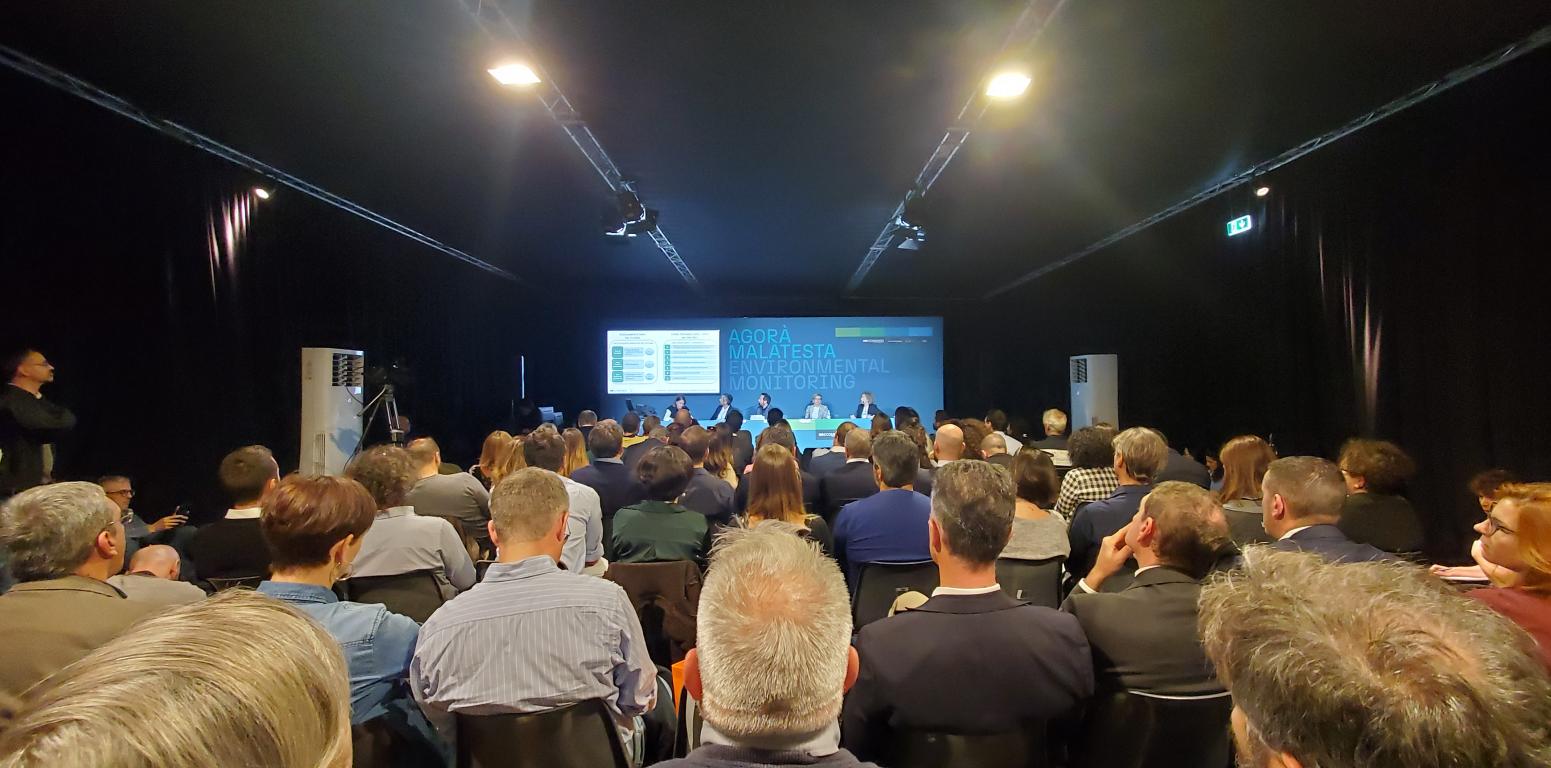
The well-known International Conference on Environmental Monitoring of Odours and VOCs, the NOSE2024, organized by AIDIC on this occasion in September 2024, in Naples, Italy, opened the call for abstracts in November. The deadline for abstract submission was the 15th of December. It is a pity that this conference is so close in time to the CASAZ-IWA conference as not many people will be able to attend both events in such a short time span.
Also in November, the ISOCS Short Course Winter iSOCS SCW 2024 was launched one more year. In this annual event, world-leading experts gather in Italy to delve into the fascinating field of chemical sensing.. and skying too ;-)
A couple of weeks later, the German VDI conference on odour management took place in Leipzig, with a very interesting selection of presentations. On this occasion, it took the editor of this website several hours to write the summary of all the presentations. So if you are interested in odour management, this is a quick way to get a glimpse of the content of an entire conference.

At the end of November too, the initiative ATTRACT Phase2 organised an event in Valencia (Spain) focused on Instrumental Odour Monitoring Systems. The event was promoted by the SNIFFIRDRONE group partners, including the University of Barcelona as the project coordinator. Several experts from various companies presented their odour-monitoring devices. The session ended with a panel discussion moderated by our chief editor Cyntia Izquierdo.
This intensive month of November came with another event. You have not heard about the ODEUROPA project from us. We haven't written much about this large project which is a bit outside the scope of things we normally write about. But to give you an idea, this is a 3-million euro project, funded by the EU, aimed at "identifying the vocabularies, spaces, events, practices and emotions associated with smells and olfaction." The concluding event of this project took place at the end of November in Amsterdam, with a successful ceremony bringing together all the stakeholders involved in this project.
In November, we dedicated an article to the Biotechniques conference, to which we have always dedicated a few lines. The website of the conference, which will take place in July 2024, is already up and running. Due date for abstract submission is before 15ᵗʰ March 2024.
And one event that should have taken place last week, but seems to have been postponed to 2024 is the 8th World Congress of the Digital Olfaction Society. This is the third time this event has been postponed, let's hope it is the definitive one! The DOS conference is together with the International Symposium on Olfaction and Electronic Nose ISOEN 2024 a conference to mark on your calendar if you are keen on artificial chemoreception, olfaction and taste. Abstract Submission Deadline for ISOEN2024 is by the way the 15th of January, 2024.
Last but not least, we finished this year 2023 with the publication of the first International Handbook on dispersion modelling. It took the experts 3 years and 35 meetings to arrive at the final text of the handbook. In the process, up to two drafts were revised, first through an internal review, followed by an external review. The result is this fantastic handbook that reflects the current state of science in the complex world of odour dispersion modelling. One week after its publication, it has already been downloaded more than a thousand times.
As for standards, there have been several very important developments this year. IEEE and CEN are still working on their draft standards for Instrumental Odour Monitoring Systems, but unfortunately they are not available yet. This year 2023 however several standards relevant to odour management have been published. Some relevant ones are:
International Standards
- ISO 23139:2023 Biological equipment for treating air and other gases. Requirements and application guidance for deodorization in wastewater treatment plants.
- ISO 16000-3:2022 Indoor air Part 3: Determination of formaldehyde and other carbonyl compounds in indoor and test chamber air
- ISO 8586:2023. Sensory analysis. Selection and training of sensory assessors.
- ISO/DIS 23138. Biological equipment for treating air and other gases. Principles and classification. (This is a draft, but can be purchased for example here or even cheaper here).
European Standards
- EN 12255-9 Wastewater treatment plants - Part 9: Odour control and ventilation.
- EN IEC 61591:2023; Cooking fume extractors - Method for measuring performance
National Standards
- VDI 3460 Sheet 3:2023 - (Still in German language) Draft Emission reduction - Thermal waste treatment - Treatment of residues
- DVGW Information Gas No. 24:2023-11 Odorant measuring devices without gas chromatographic separation of the analyte into its individual components for operational measurement. This is not a standard and it is in German, but it is relevant.
- VDI 2595:2023 Emission reduction - smoking systems for food.
- VDI 3886 Sheet 1:2023-12 Determination and evaluation of odours - odour report - determination of necessity and instructions for preparation. This version looks like a revision of this relevant standard from the previous 2019 version.
- VDI 2594:2024-01 - Draft Emission reduction - pulp drying systems in the sugar industry
- VDI 2283:2023. Emission reduction - plants for the production of asphalt mixtures (asphalt mixing plants).
- ASTM D1296-23 Standard Test Method for Odor of Volatile Solvents and Diluents
- ASTM D6523-22 Standard Guide for Evaluation and Selection of Alternative Daily Covers (ADCs) for Sanitary Landfills
- UNE 77270:2023 Standard on Building collaborative odour maps through citizen science.(in Spanish, coming soon in English).
- UNI/TR 11917:2023. Safety and environmental guidelines for landfills biogas plants (in Italian).
- NTA 9065-1:2023 Air quality - Odour measurements - Part 1: Planning, execution and reporting of odour investigations. (in Dutch)
- NTA 9065-2:2023 Air quality - Odour measurements - Part 2: Sampling and analysis. (in Dutch)
And this is our summary of the year 2023. We hope you have enjoyed reading it, as we have enjoyed writing it. If you want to keep up to date with odour management, as we always say, the best thing to do is to subscribe to our monthly newsletter.
We wish you all the best for the coming year 2024. This holiday season, don't forget to spend quality time with your loved ones. Put aside the odour management for some days and spend time with those who really need you now. That way, you will take a breath of fresh air to start this year 2024 with all the energy you can muster.
If you find this article interesting, you might be also interested in these articles:
- What happened in the odour management world in 2022
- What happened in the odour world in 2021
- What happened in 2020 in the odour management world
- What happened in 2019 in the odour management world
- What happened in 2018 in the odour management world
