There is no translation available.

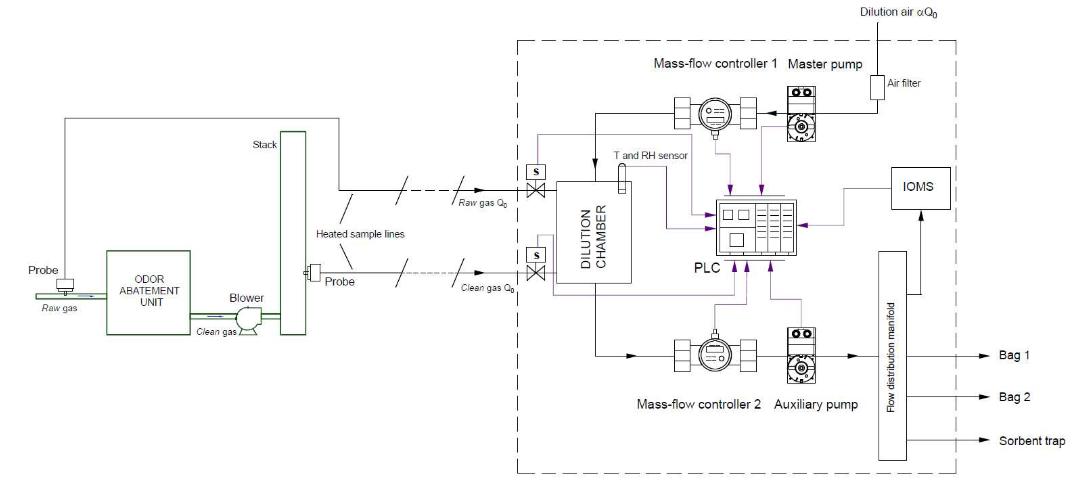
   This article presents an approach for continuous duct sampling, designed to feed an IOMS trained with dynamic olfactometry data from the same system. The setup enables sequential sampling of odor inflows and outflows through a reduction device, allowing for efficiency evaluation.

   It addresses challenges such as reducing humidity, implementing hardware/software adjustments to account for temperature fluctuations, and developing algorithms to correlate odor concentrations between sampling and the IOMS. Field-calibrated results are presented from a system installed in a waste treatment plant, analyzing both odor fluctuations during the plant's daily cycle and the efficiency of the odor reduction unit.


F. Cangialosia 1*, A. Fornarob 2

1 Tecnologia e Ambiente (T&A), Putignano (BA), Italia
2 Labservice Analytica, Anzola Dell’Emilia (BO), Italia
* federico.cangialosi@icloud.com
There is no translation available.

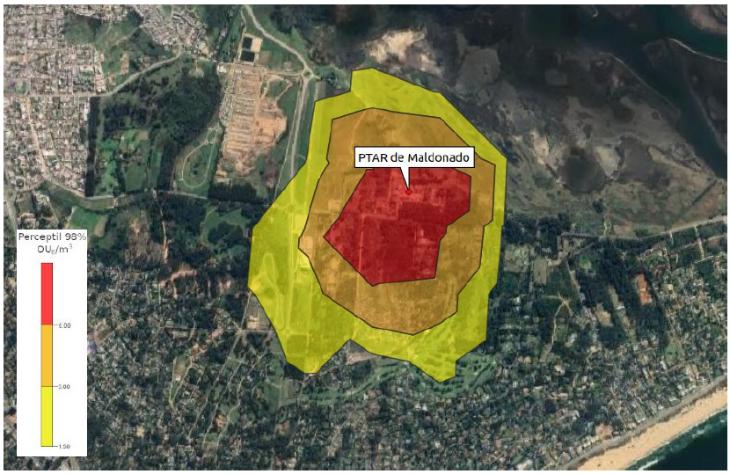
   The Jagüel wastewater treatment plant in Punta del Este, Uruguay, conducted an extensive study to address odor issues ahead of its renovation. Corrective actions significantly reduced odors, with no complaints reported during the summer.

   Through field measurements and advanced modeling, improvements such as enhanced ventilation in centrifuge rooms, activated carbon filters, and ClFe3 dosing in sludge were implemented, ensuring the system's effective performance.

A. Irigoyen 1*, D. Berger 1, A. Anton 2 &  C. Diaz 2

1 CIEMSA, Uruguay.
2 Ambiente et Odora S.L., Spain
* Airigoyen@ciemsa.com.uy

There is no translation available.

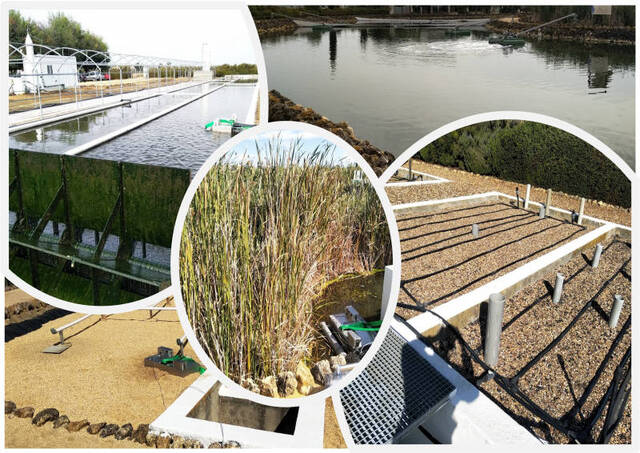
   The emission of unpleasant odors in wastewater treatment plants is mainly due to the treatment of biological sludge, due to its high organic matter concentration. This study, conducted by CENTA in Carrión de los Céspedes (Seville), evaluates the efficiency of organic matter and nutrient removal, as well as the derived odor emissions from various technologies.

   The highest odor emission rates were found in anaerobic lagoons, facultative lagoons, and septic tanks. Two indices were defined to relate odor emissions to the efficiency of organic matter removal (OGIC) and combined organic matter and nitrogen removal (OGICN). The highest efficiency values were found in free-flowing gravel wetlands and anaerobic lagoons. A principal component analysis grouped the technologies evaluated based on hydraulic retention time and pH.

Gutiérrez, M.C. 1*, Martín, M.A. 1, Ruiz-Muñoz, A. 1, Márquez, P. 1, Toledo, M. 2, Salas, J.J. 3, Siles, J.A. 1

1 Departamento de Química Inorgánica e Ingeniería Química (Área de Ingeniería Química). Facultad de Ciencias, Universidad de Córdoba. Instituto Químico para la Energía y el Medioambiente (IQUEMA). Campus de Excelencia Internacional Agroalimentario (ceiA3). Campus Universitario de Rabanales. Carretera N-IV, km 396, 14071. Córdoba, España.
2 Instituto de Procesos Sostenibles, Área de Ingeniería Química. Universidad de Valladolid. Dr. Mergelina, s/n, Valladolid, 47011, España.
3 Fundación Centro de las Nuevas Tecnologías del Agua (CENTA). A-49, km 28. 41820. Carrión de los Céspedes, Sevilla, España.
* mc.gutierrez@uco.es

Altri articoli …

All the content here under Creative Commons license