Abbattimento degli odori

There is no translation available.

    The pulp industry faces challenges in balancing biological wastewater treatment with effective odor control.

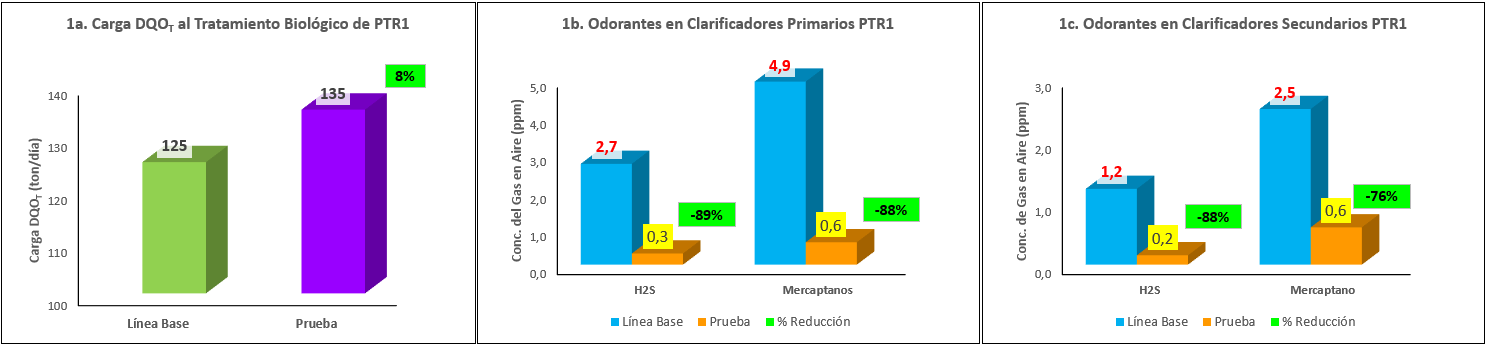
   SciCorp’s micronutrient technology, based on plant extracts, selectively stimulates specific bacteria within biological sludge to significantly reduce emissions of malodorous gases such as hydrogen sulfide and mercaptans. Additionally, this technology enhances the biological treatment performance by increasing load capacity, lowering phosphorus concentration in the treated effluent, and reducing biosolid production, thereby optimizing overall wastewater treatment plant efficiency.

D. Maat1, J. Soza2 & J. Nuñez3

1SciCorp International, Mississauga ON, Canada.
2CMPC Pulp Maderas, Los Ángeles, Chile
3SciCorp International, Los Ángeles, Chile.
There is no translation available.

   A hybrid material of activated carbon and MOFs is proposed for the adsorption of trimethylamine (TMA) emitted by the fishing industry, achieving complete removal in the aqueous phase.

   Efforts focus on optimizing its surface area and selectivity for effective application under real conditions, contributing to environmental impact mitigation and improving the quality of life of nearby communities.

P. Méndez, R. Ahumada, V. Novoa & G. Salazar

 University of the Bío-Bío, Avenida Collao 1201, Concepción, Chile.
* pamendez@ubiobio.cl

There is no translation available.

   This study evaluates a push-pull ventilation system with localized extraction designed to reduce H2S concentrations in the settling stage of a wastewater treatment plant in Santiago, Chile.

   CFD simulations and field measurements show that the existing crossed ventilation system results in H2S concentrations up to 21 mg/m³ over the water surface. The improved push-pull system effectively lowers H2S levels in the plant corridors to below 7.5 ppm, complying with Chilean regulations.

I. Polanco1, M. Rodríquez1, A. Hammad2, A. Haddad3, V. Tam4  & D. Vasco1

Department of Mechanical Engineering, University of Santiago de Chile, Santiago, Chile. ivan.polanco@usach.cl
Faculty of Built Environment, University of New South Wales, Sydney, Australia
Department of Civil Construction, Federal University of Rio de Janeiro, Rio de Janeiro, Brazil
School of Built Environment, Western Sydney University, Penrith, NSW, Australia

Altri articoli …

All the content here under Creative Commons license