There is no translation available.
Selection criteria for odour abatement technologies have been traditionally economic and based on the flow rate to be treated, odour concentration (or of a certain surrogate such as H2S) and removal efficiency. However, nowadays social and environmental aspects are starting to gain importance
J. M. Estrada1, B. Kraakman2,3, G. Quijano1, R. Lebrero1, R. Muñoz1
1 Valladolid University, Department of Chemical Engineering and Environment Technology
2 CH2M HILL Australia
3 Delft University of Technology, Department of Biotechnology
Keywords: adsorption, biofiltration, chemical scrubber, environmental impact, odour abatement, operating costs.
 Abstract
Selection criteria for odour abatement technologies have been traditionally economic and based on the flow rate to be treated, odour concentration (or of a certain surrogate such as H2S) and removal efficiency. However, nowadays social and environmental aspects are starting to gain importance.
Odour abatement systems are designed to operate over long periods of time (20-30 years) and under dynamic scenarios and conditions. Therefore, an economic analysis of sensitivity of the operating costs towards different design and operational parameters is crucial.
 Abstract
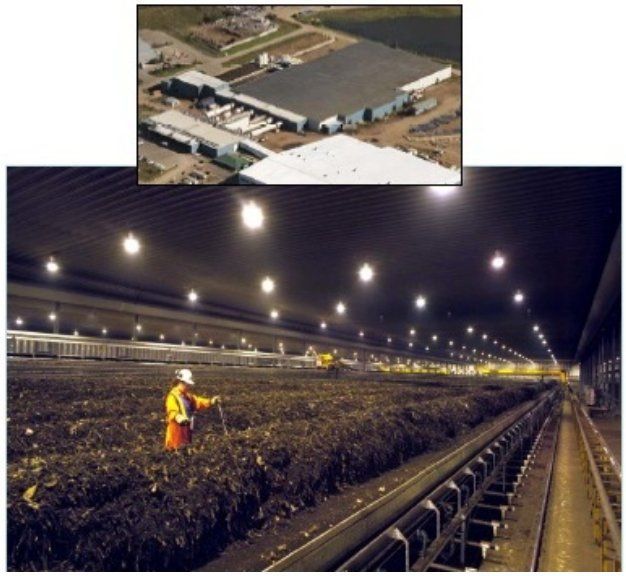 The Edmonton Waste Management Centre (EWMC) of Edmonton, Alberta, Canada, is a unique collection of advanced waste processing and research facilities. Owned and operated by the city of Edmonton Waste Management Services, the EWMC is an integral part of Edmonton’s sustainable approach to waste management. The Centre is 233 hectares in size – 25 hectares is devoted to their composting facility, and is the largest of its kind in North America.