There is no translation available.
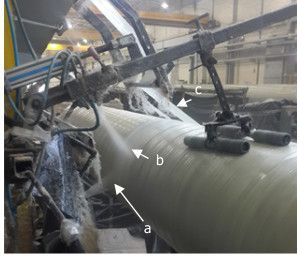 The Fiber Glass Reinforcing Plastic Industry in Argentina has undergone a huge development. Unfortunately, only a few facilities work with appropriate abatement pollutant emission technology. That is so due to the lack of regulations and control laws in this country.
This work describes a case study of the design of equipment to reduce styrene emissions from a filament winding and chop hoop mixed process from a factory that produces Reinforcing Plastic pipes.
C. A. Severi1, J. Galvez2 and S. Vardaro2
1-Student of Master Environmental Engineering. National University of Cuyo, Argentina.E-mail: cralse17@yahoo.com.ar
2-Bioprocesses. Faculty of Engineering. National University of Cuyo.
 Odor control in waste water treatment plants and pumping stations is already a priority in the integration with the neighborhood. Lately the energetic and economic optimization of deodorization has become very important.
 The objective of this paper is to describe and evaluate the project of odour impact reduction by means the design, erection and start up of a osmogenic barrier through a spray system of specific products, in waste mechanical and biological treatment plant.