There is no translation available.
 A new proposal for a European Norm about electronic air monitoring of odorants with the so-called electronic noses (or e-noses) have been recently filled. The 18th of December, the European Committee for Standardization sent a letter to all the people involved in the Technical Committee dealing with Air Quality to comment on the adoption of a proposal with the tentative name "prEN xxxxx Air quality – Continuous instrumental odorant monitoring in air to assess risks of odour (nuisance) and safety".
This new work item proposal "Electronic nose" will be based on the Dutch Norm NTA 9055:2012 Air quality - Electronic air monitoring - Odour (nuisance) and safety (Luchtkwaliteit - Elektronische luchtmonitoring - Geur(overlast) en veiligheid).
 In this article we make a comparative analysis of the performance of the AERMOD and SYMOS’97 dispersion models for simulating the dispersion of odorous compounds in the atmosphere. Although there are a large amount of air dispersion models in literature, there are few data bases that allow the assessment of results obtained by the dispersion simulation of odorous compounds.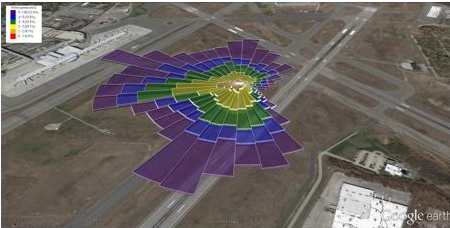

 A fundamental operation performing odor impact assessment is the analysis of meteorological data, particularly wind direction and speed. Such an analysis allows for example to evaluate the number of calms, which may give raise to high concentration values, and to spot possible errors in meteorological data before using them in an atmospheric dispersion models. Moreover, the determination of the prevailing wind direction allows to understand if possible sources are generally upwind of the potential receptors.