There is no translation available.
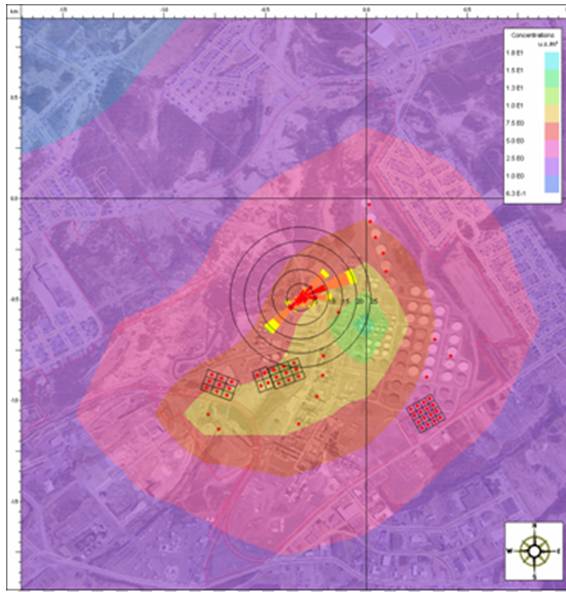 Dispersion modeling defines the relationship between the emission source and the receptor. While control measures may be applied to the emission source, compliance with odor nuisance standards depend on whether the odor concentrations at the receptor have been adequately reduced with respect to their frequency, intensity, duration and location.
Luis José Marchant Santa María.1
1 Project Manager, Odotech Ltda, Cruz del Sur 133, oficina 503, Las Condes, Santiago, Chile, lmarchant@odotech.com

 This paper will introduce the importance of proper sampling when assessing odours. Generally, when complaints occur in a region, the first step is to investigate any given complaints. Some of the grievances may not be valid due to factors such as wind direction or other meteorological conditions.