There is no translation available.
 The RAMS-CALMET-CALPUFF modelling system has been used to simulate the odorous impacts from a paper-mill in an urban area located several kilometres away in a coastal mountainous area.
Over the last years, episodes of citizens complaints due to malodours have been registered, with a potential origin in several pollution sources located inside and outside the city. A selection of episodes under anticyclonic conditions, with poor ventilation in general and continuous changes of stability and wind during the day, has been simulated.
V. Valdenebro1*, E. Sáez de Cámara1, G. Gangoiti1, L. Alonso1, J. A. García1, M. Navazo2, M. de Blas1, J. Lavín3, N. García-Borreguero
1Universidad del País Vasco UPV/EHU, Escuela de Ingeniería de Bilbao, Alameda de Urquijo s/n, 48 013 Bilbao, España.
2Universidad del País Vasco UPV/EHU, Escuela Universitaria de Ingeniería de Vitoria-Gasteiz, C/ Nieves Cano 12, 01006 Vitoria-Gasteiz, España.
3 Sociedad Española de Abastecimientos, S.A., Gran Vía Marqués del Turia,¸19, 46005, Valencia, España.
4Gobierno Vasco, Departamento de Medio Ambiente y Política Territorial, Dirección de Administración Ambiental, Servicio de aire, Donostia-San Sebastián 1, 01010 Vitoria-Gasteiz, España.
* veronica.valdenebro@ehu.eus
 This report exposes the results obtained during the operational years of two plants where Advanced Biofiltration System (BAP) were installed to treat the odour emissions created during the process or from the sewage waters derived from this process.
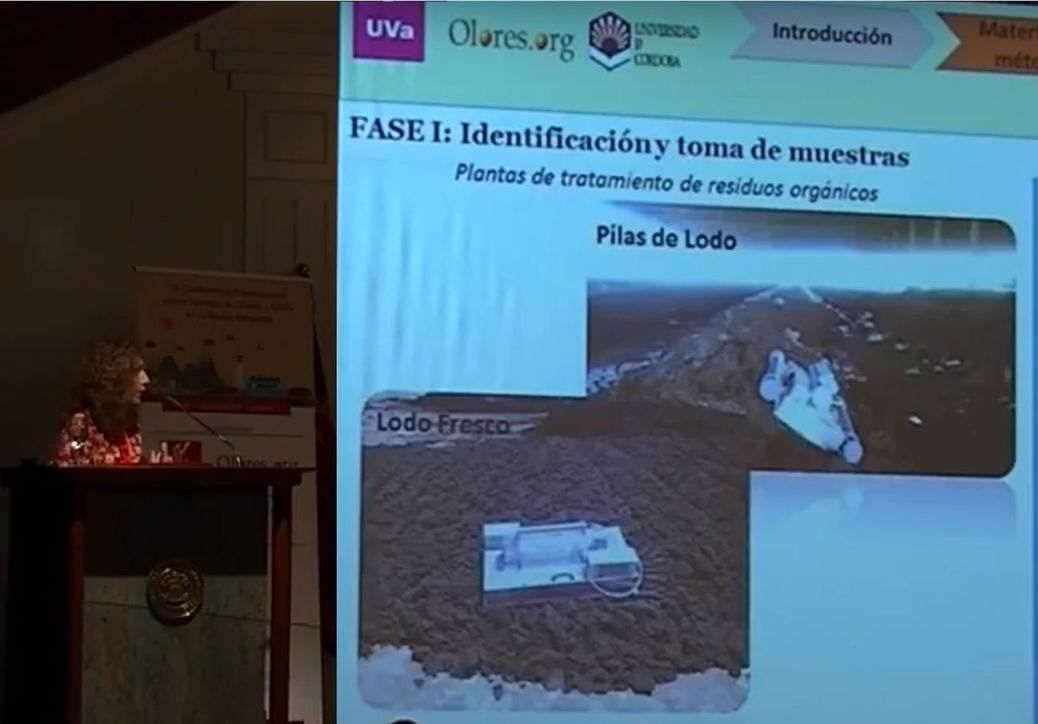 This study presents several results related to the odorous impact derived from organic waste treatment and management plants carried out by the research group. Different raw materials were selected to evaluate the odorous impact and its relationship with their physico-chemical characterization or operational variables. Statistical evaluation through Principal Component Analysis (PCA) groups the odor by its origin or raw material.