There is no translation available.

Instrumental Odour Monitoring Systems (IOMS) are employed for continuous objectified technical olfaction. However, the reference for odour perception is the human nose, surpassing technology with outstanding sensitivity and selectivity for many compounds. In order to achieve comparable results, IOMS have to fulfil manifold requirements, resulting in considerable effort in engineering and cost. One-size-fits-all solutions are unlikely to function properly but are nevertheless marketed as the resulting performance is difficult to assess.
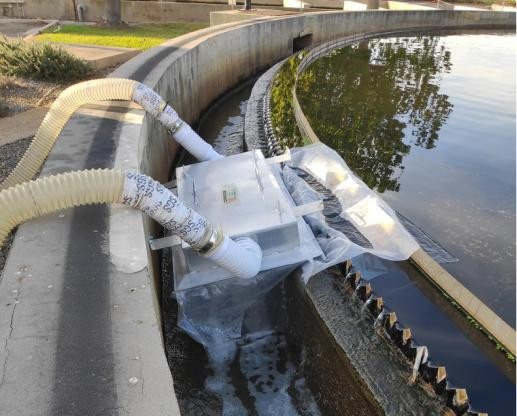
In the course of the publicly funded research project SEPEG (sensor networks for the objective perception of odour sources, BMBF FKZ 01IS17087) all aspects of a complete IOMS solution are scrutinized in their respective context. A main focus of the project is on field test evaluation in real installation situations. Two installation sites have been equipped with networks of real-time IOMS devices.