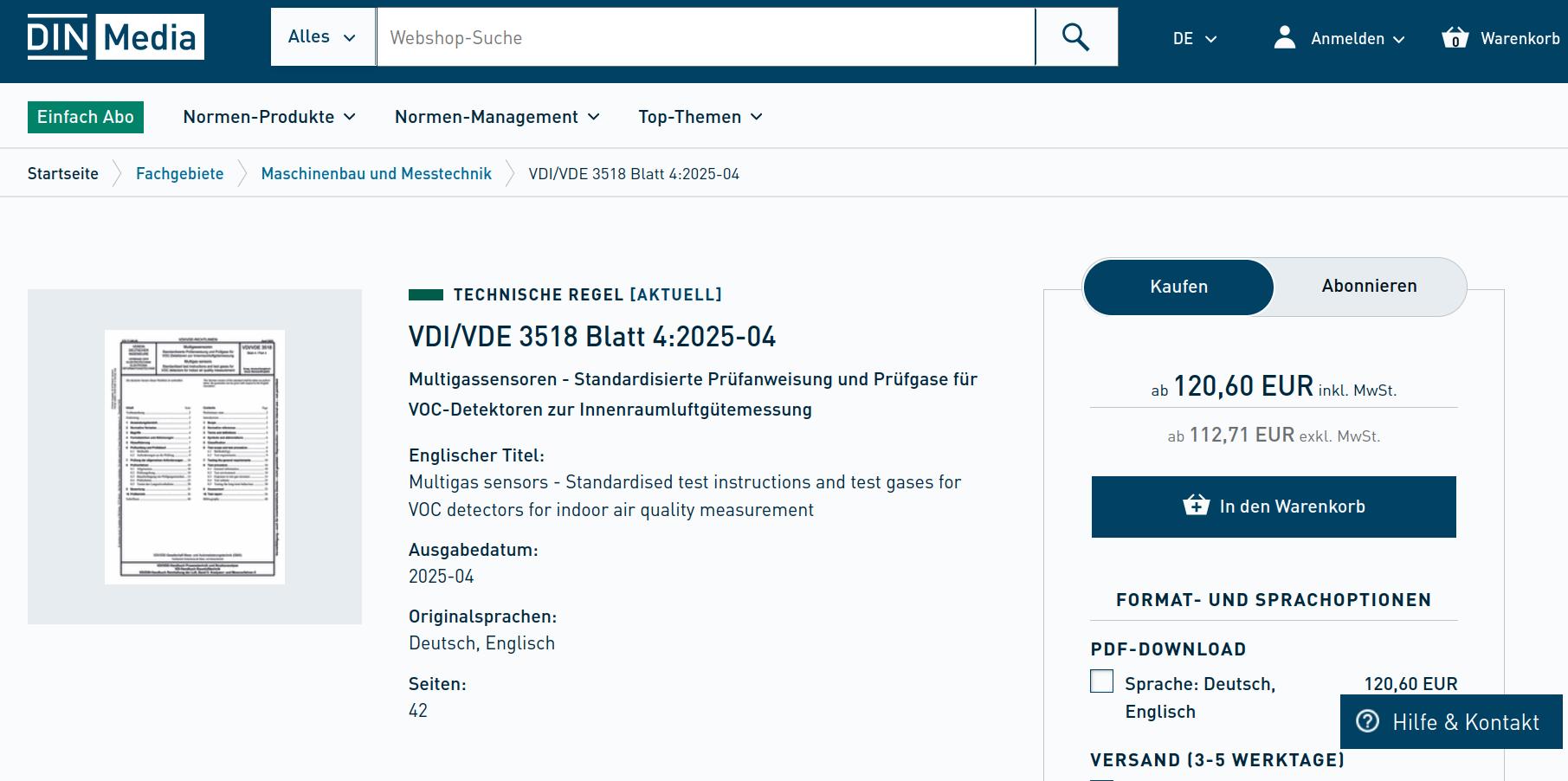
La VDI/VDE 3518 Blatt 4 è una nuova linea guida tecnica che definisce le procedure di test standardizzate e le miscele di gas di prova per i rilevatori di VOC utilizzati per la misurazione della qualità dell'aria interna (IAQ). È intitolata "Sensori multigas - Istruzioni di prova standardizzate e gas di prova per i rilevatori di VOC per la misurazione della qualità dell'aria interna" ed è stata pubblicata nell'aprile 2025 sotto la sigla ICS 71.040.40. Questa linea guida di 42 pagine ha lo scopo di rendere le misurazioni dei rilevatori di COV comparabili e riproducibili tra le diverse tecnologie e i diversi produttori di sensori.

   La linea guida si rivolge principalmente ai produttori di rilevatori di COV e di sensori multigas, ai laboratori di prova, agli enti di certificazione e agli esperti di igiene dell'aria interna e di ingegneria edilizia. Fornisce un quadro di riferimento per la valutazione delle prestazioni dei sensori, tra cui sensibilità, selettività, tempi di risposta e stabilità a lungo termine. Definendo condizioni ambientali standardizzate, composizioni di miscele di gas e sequenze di test, la VDI/VDE 3518 Parte 4 mira a sviluppare una metodologia in grado di ottenere valutazioni più affidabili della qualità dell'aria interna. Ci riuscirà? Continuate a leggere per scoprirlo.
There is no translation available.

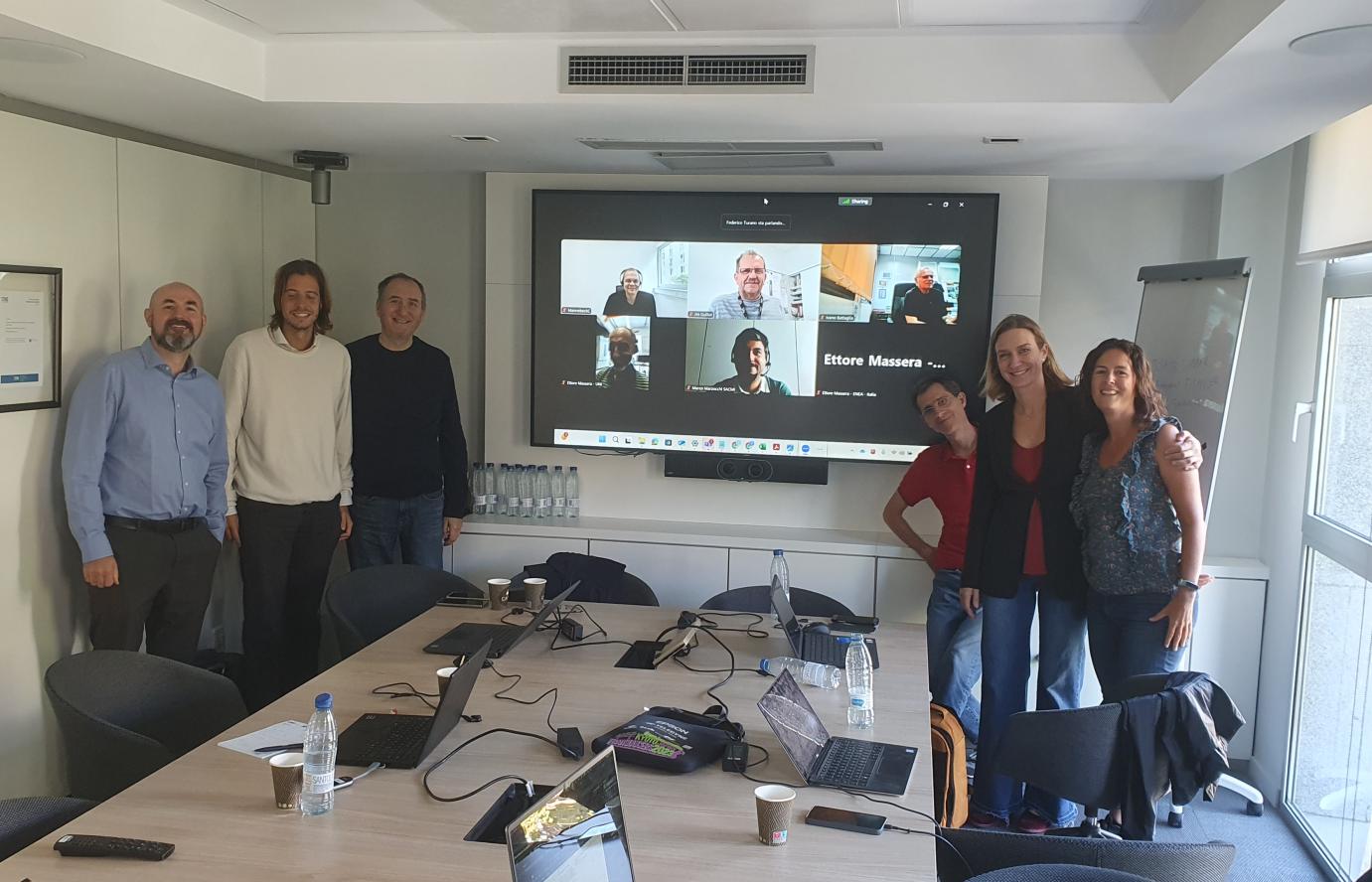
   On September 22 and 23, a new meeting of CEN/TC 264/WG 41, that is, the Working Group 41 of the Technical Committee 264 on Air Quality of the European Committee for Standardization, took place. The agenda for the day included several items, but in the end, draft 3, which deals with field validation, took up most of the group's working hours.

   The WG41 is working in three standards: 1) Instrumental Odour Monitoring Systems (IOMS) - Part 1: Definitions and general aspect; 2) Instrumental Odour Monitoring Systems (IOMS) - Part 2: Technical specifications and QA/QC requirements and 3) Instrumental Odour Monitoring Systems (IOMS) - Part 3: Field validation. This last draft has not been discussed during the second stage of the development of the standard until now. But the experts took the challenge and a text was delivered on time to activate the 3 PWIs, which is the next step in the CEN process.

There is no translation available.

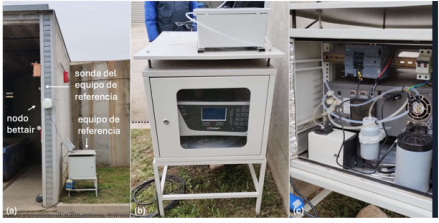
   This project demonstrates that multisensor systems with electrochemical sensors, enhanced by Data Learning models, can accurately and reliably monitor hydrogen sulfide (H2S) in wastewater treatment plants without costly or frequent manual calibration.

   The pilot phase, conducted in early 2024, achieved excellent agreement with reference analyzers, offering a low-cost, low-maintenance, and innovative solution for continuous H2S measurement in WWTPs..

M. Padilla, S. Udina, E. Flores, M. Escribano, F. Ramírez, J. Perelló

  Bettair Cities S.L.

framirez@bettaircities.com

Altri articoli …

All the content here under Creative Commons license