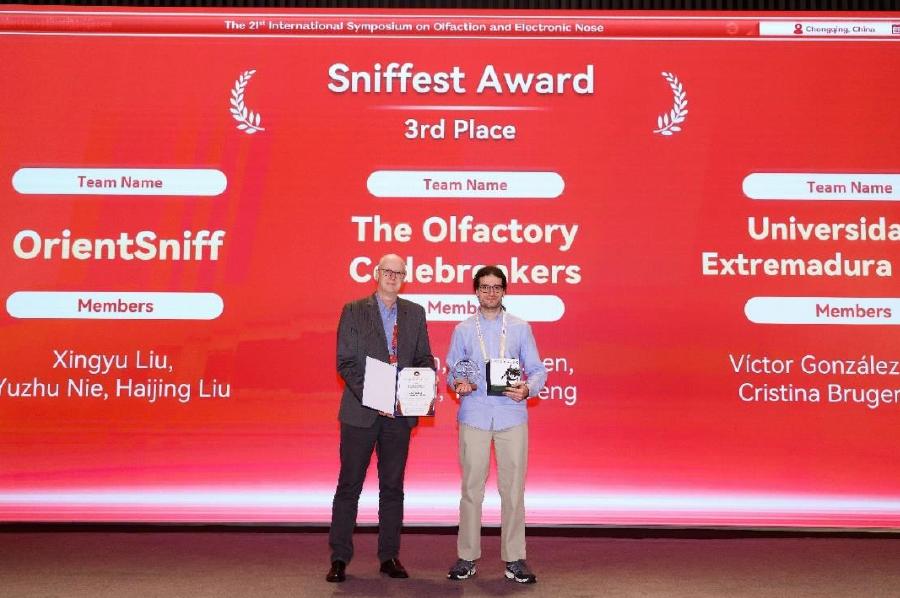
ISOEN 2026 was held from May 17 to 20, 2026, in Chongqing. This international conference is one of the main scientific forums dedicated to research and technological development in the fields of artificial olfaction, gas sensing systems, electronic noses, and electronic tongues. The event brought together researchers, industry representatives, and academic institutions working on sensor technologies, signal processing, pattern recognition, and analytical instrumentation for chemical sensing applications.

   The conference program included a wide range of scientific and technical activities, such as specialized tutorials, oral technical sessions, poster presentations, and technology-oriented competitions.
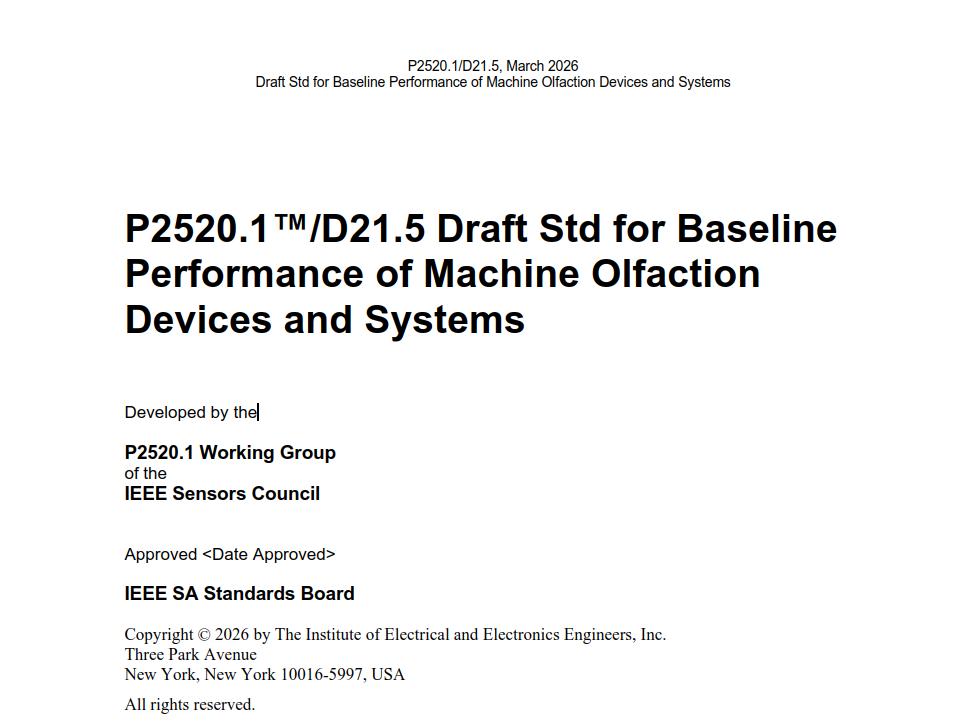
   After a series or many meetings during the first months of the year, the IEEE working group developing the IEEE P2520.1 draft has reached its final stage of development, bringing the baseline standard for machine olfaction devices and systems closer to completion. This draft defines a common testing framework for these devices, with the goal of measuring their performance in differentiation, recognition, and quantification tasks.

   The new IEEE standard P2520.1 is designed to provide a baseline performance standard that can be applied across a wide range of machine olfaction technologies. The document makes clear that it is intended as a foundation for the broader P2520 series, allowing more application-specific standards to build on top of a shared testing structure. Mr. James Covington, convenor of this initiative, recently talked about this new standard in the 24h-MOM.

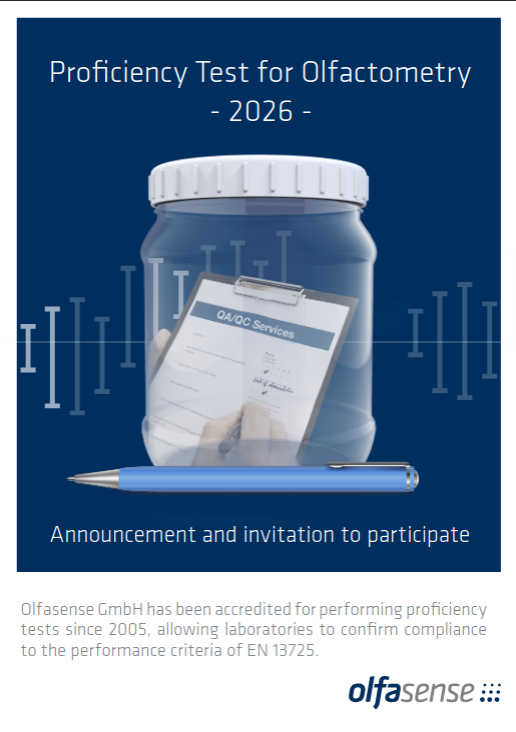
   Olfasense GmbH has officially opened registration for its 2026 Proficiency Test (PT), inviting olfactometric laboratories worldwide to take part. Accredited since 2005, this PT provides laboratories with the opportunity to evaluate their performance in line with the criteria set out in EN 13725:2022, a key standard for laboratories maintaining ISO 17025 accreditation. The annual proficiency test continues to play a key role in confirming that laboratories meet international standards for olfactometric measurements.

   The 2026 PT is again designed to help laboratories verify their compliance with the critical performance criteria of EN 13725:2022, focusing on precision under repeatability conditions and accuracy for 1-butanol. These parameters remain fundamental for assessing the reliability and consistency of olfactometric measurements. Moreover, participants will once more have the option to analyse Tetrahydrothiophen (THT), which will be included if at least eight laboratories register for this additional measurement.

More Articles …

All the content here under Creative Commons license