There is no translation available.

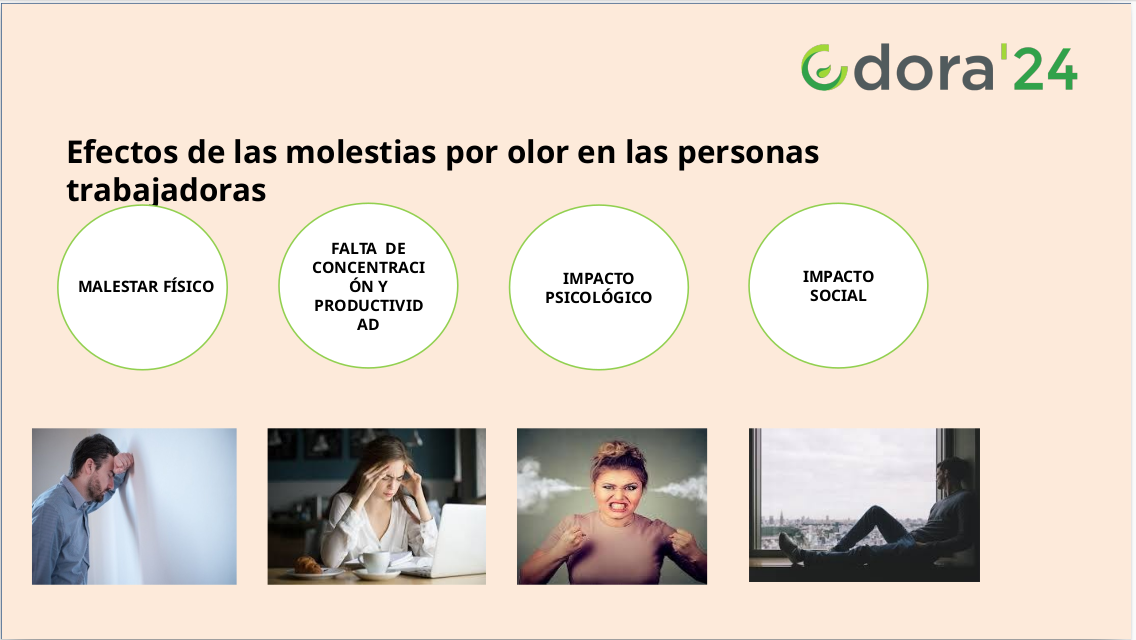
   Unpleasant odours in workplaces can cause discomfort, affect workers’ physical and psychological well-being, and reduce productivity, although they are not considered a direct indicator of toxicity, and there is no specific regulation for their control. 

   Nevertheless, the presence of bothersome odours can lead to symptoms such as headaches or nausea in some individuals. To address the issue objectively, in 2023 a group of volunteer experts reviewed international methodologies and decided to implement a guide based on the German method and the calculation of the Odour Activity Value (OAV) to estimate the impact of the main odorants in various activities.

Gloria Sánchez*, Carlos Díaz, Ainhoa Anton, Jordi Gascon, Rodrigo Rosales, Ana Oubiña, Antonio Amo, Marc Vinot, Macarena Segarra, Irene Lara, Johana Burbano

   Indoor Environmental Quality Odour Working Group, AMIGO Association, International Environmental Odour Management Society. *ssantos@amb.cat

Standard UNE 77270, już opublikowany i dostępny w języku angielskim, osiągnął ważny kamień milowy. Obecnie uruchamiana jest inicjatywa mająca na celu zapewnienie finansowania kolejnego kroku: przekształcenia standardu w normę europejską (EN). Celem jest zebranie funduszy na rozpoczęcie prac, a stowarzyszenie AMIGO jest liderem w zbieraniu wsparcia od osób i organizacji zainteresowanych tym projektem.

Pomysł polega na utworzeniu grupy roboczej w ramach Komitetu Technicznego TC264 ds. Jakości Powietrza, przestrzeni, w której eksperci mogą współpracować nad tym ważnym tematem. Włochy również pracują nad krajową normą dotyczącą tego samego zagadnienia, co stwarza wyjątkową okazję do współpracy. Inicjatywa ta jest zgodna z modelem Grupy Roboczej 41 (WG41), która została utworzona po opublikowaniu podobnej normy holenderskiej.

There is no translation available.

   Olfasense, a leading company in odour and emission measurement, is inviting laboratories worldwide to participate in its 2024 proficiency tests. These tests offer a unique opportunity for laboratories to demonstrate compliance with international performance standards and compare their results with peers globally. The proficiency tests cover volatile organic compounds (VOC), semi-volatile organic compounds (SVOC), and odour assessments for both building products and automotive materials. This initiative is a collaborative effort between Olfasense and the German Federal Institute for Materials Research and Testing (BAM).

   The proficiency tests for building products focus on VOC and SVOC emissions and odour assessments using emission test chambers. Laboratories can register for three independent parts of the test: the emission test chamber method (ISO 16000-6/9 and EN 16516), odour assessment (ISO 16000-28), and an analysis check using transfer standard tubes. These tests will be conducted in November and December 2024, with a registration deadline set for 9 August 2024. Participating laboratories will benefit from a detailed evaluation of their performance, helping them ensure compliance with stringent industry standards.

Więcej artykułów…

Podkategorie

All the content here under Creative Commons license