The design of wastewater collection systems is crucial for efficient water reclamation, focusing not only on hydraulic performance but also on biological and chemical factors that impact water quality and infrastructure longevity.
Addressing issues like corrosion, odors, and hazardous conditions in the design phase enhances sustainability and reduces costs. This paper explores key design strategies linked to Environmental, Social, and Governance (ESG) benefits, including limiting anaerobic conditions, reducing turbulence, enforcing pretreatment, and planning for system growth, supported by a case study demonstrating successful implementation.
A. Caicedo, V. Harshman.
V&A Consulting Engineers, Inc.
11000 Broadway, Suite 320, Oakland, California, USA.
Competing interests: The author has declared that no competing interests exist.
Academic editor: Carlos N. Díaz.
Content quality: This paper has not been peer-reviewed.
Citation: A. Caicedo, V. Harshman , 2024, One Water, One Collection System: Sustainable Design, ODORA24 Conference, Barakaldo, Spain, www.olores.org.
Copyright: 2025 Olores.org. Open Content Creative Commons licence. It is allowed to download, reuse, reprint, modify, distribute, and/or copy articles in Olores.org website, as long as the original authors and source are cited. No permission is required from the authors or the publishers.
ISBN: pending.
Keywords: Bioreactor; environmental impact; social impact; governance impact; odours; anaerobic conditions.
Abstract
Collection systems are vital to any water reclamation utility. Collecting wastewater from points of origin and conveying it to a water resource recovery facility (WRRF) is the essential first step in producing water for safe disposal or, ideally, reuse. Given the importance of the collection system, designers of collection systems rightfully focus on hydraulic issues such as capacity, resiliency, and efficiency of the pumping and piping systems that make up a collection system. However, biological and chemical processes within the collection system also affect the quality of the water being conveyed. When not addressed, they can lead to infrastructure corrosion, public odor impacts, hazardous work conditions, and can negatively impact the downstream reclamation facility. Addressing these issues in the design phase can extend asset life, reduce operating cost, and improve service for collection systems.
The paper addresses several design aspects of collection systems and the potential Environmental, Social, and Governance (ESG) impacts of design choices:
Environmental – Reduction of corrosion, control of septicity and volatile fatty acid production optimization.
Social – Reduction of odours and service disruption, and resilient design.
Governance – Careful design can prevent failures due to corrosion, in turn reducing spills and increasing compliance with permits.
The following design topics and their link to ESG goals are discussed in this paper:
- Limiting anaerobic conditions
- Limiting turbulence
- Enforcing pretreatment
- Designing for growth
- Designing for corrosive environments
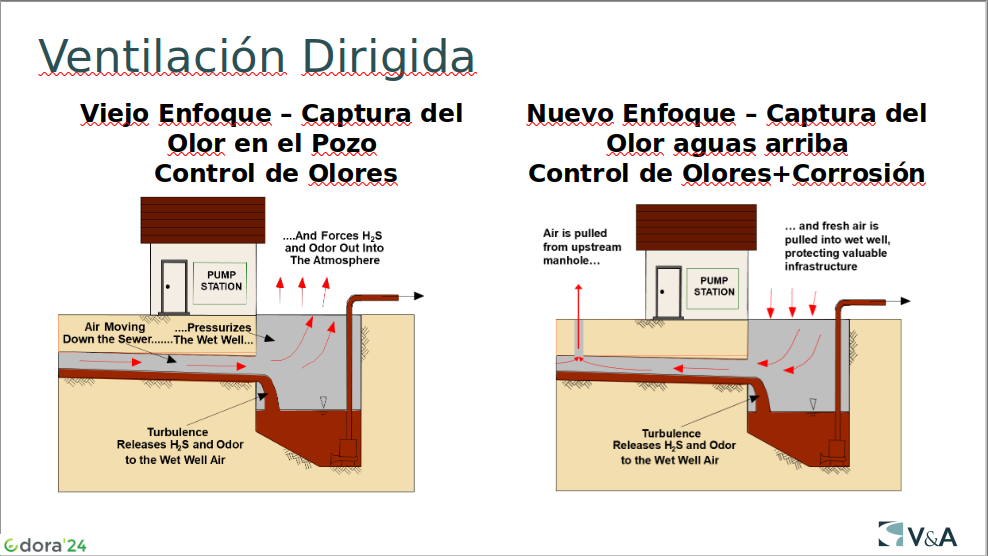
- Targeted ventilation
Finally, the paper provides a case history of a collection system that has recognized ESG benefits from implementation of these design considerations.
See the full article in other languages:
- French
- Spanish
- German
- Polish
- Arabic