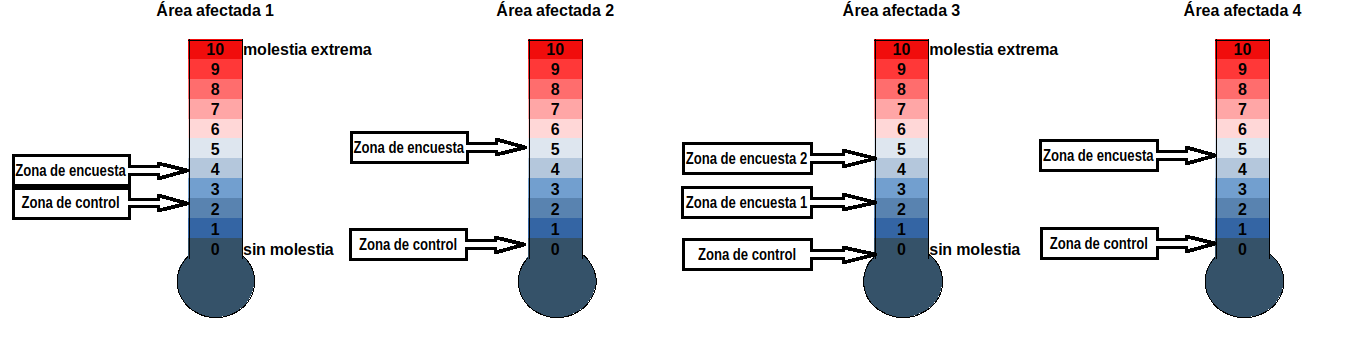
Chile’s first odour regulation for pig farming, enacted in 2023, prompted an evaluation of its social impact.
A survey in four affected regions showed significantly higher annoyance levels than in control areas, with women reporting more behavioural adaptations. While no gender differences were statistically significant, the study highlights the need for larger samples and better implementation strategies. The methodology could also be applied to assess odour regulations in other industries.
G. Schleenstein1 y D. Caimanque2
1 Ecotec Ingeniería Ltda., José Victorino Lastarria 70 of. 213, Santiago de Chile
2 Ministerio del Medio Ambiente, San Martín 73, Santiago de Chile
* gs@ecotec-ingenieria.cl
Competing interests: The author has declared that no competing interests exist.
Academic editor: Carlos N Díaz.
Content quality: This paper has not been peer-reviewed.
Citation: G. Schleenstein y D. Caimanque, 2025, Evaluation of the First Odor Standard in Chile Using Survey Methodology (NCH 3387:2015), OLORES25 Congress, Santiago, Chile, www.olores.org.
Copyright: 2025 Olores.org. Open Content Creative Commons licence. It is allowed to download, reuse, reprint, modify, distribute, and/or copy articles on Olores.org website, as long as the original authors and source are cited. No permission is required from the authors or the publishers.
ISBN: pending.
Keywords: Piggeries, odour annoyance, standards, surveys.
Abstract
The first odour regulation in Chile, applicable to the pig farming industry, came into force in 2023, generating the need to evaluate its impact on the public's perception of annoyance. This study analyses the results of the application of the odour annoyance survey, based on NCh 3387:2015, in four areas of the country affected by odorous emissions from pig farms. The findings indicate that impacted areas have significantly higher levels of annoyance compared to control areas. No statistically significant gender differences were found, although women reported greater behavioural changes as a coping strategy. It is recommended to expand the sample surveyed and improve the implementation strategies, considering the context of insecurity in the country. Finally, the methodology used could be replicated in future studies to evaluate the effectiveness of odour regulations in other industrial sectors..
See the full article in other languages:
- French
- Spanish
- German
- Polish
- Arabic