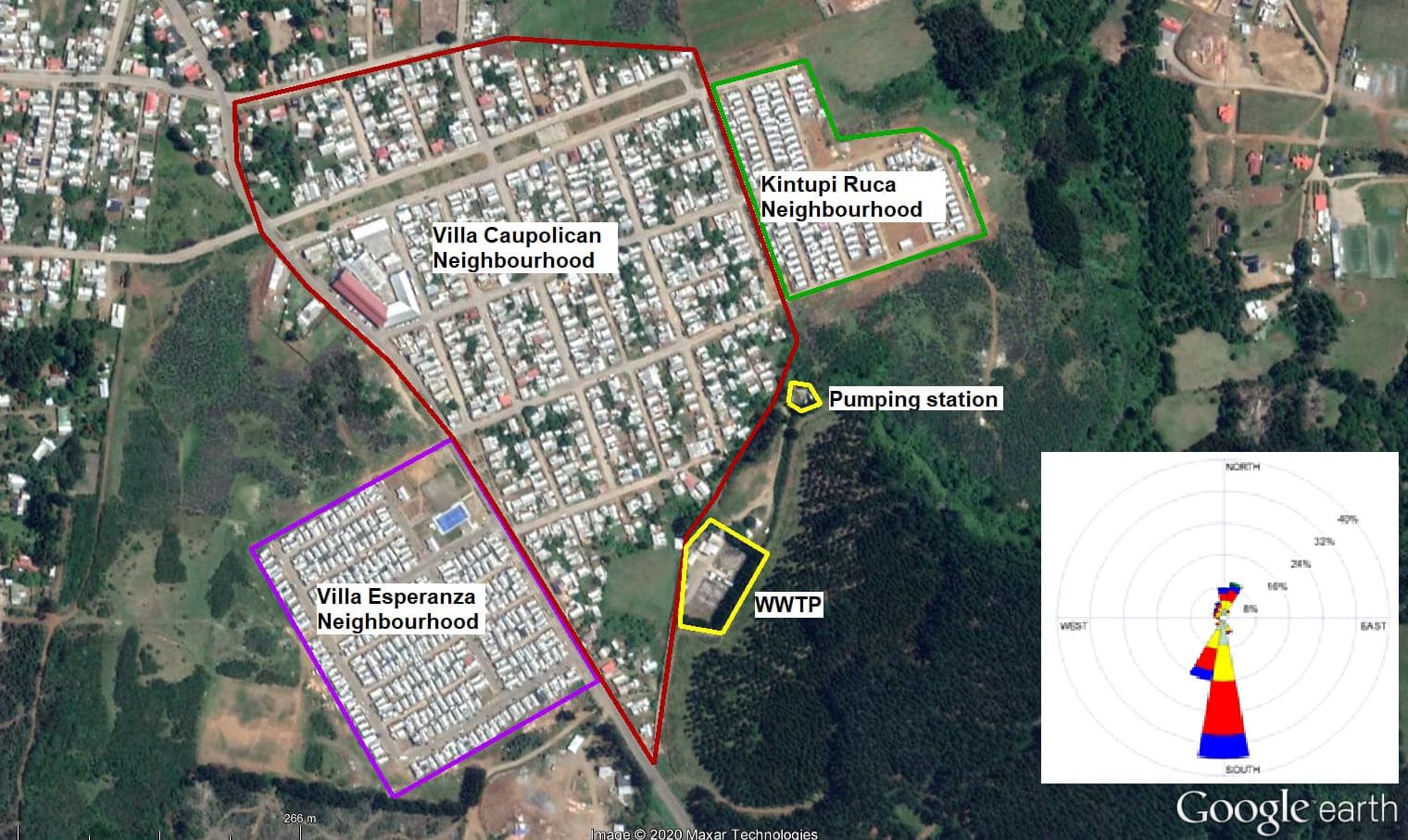
Increasing citizen demands for better environmental quality have led Chile, a party to the Escazu Agreement, to adopt participatory monitoring in environmental assessments, including for odour pollution.
This work aims to compare the D-NOSES citizen-based odour data collection method with traditional assessment approaches. The study will evaluate the consistency of citizen-reported odour observations using an odour annoyance index. This assessment is crucial to validate the reliability of citizen-generated odour measurements.
N. Muñoz* & G. Schleenstein
Ecotec Ingeniería Ltda., José Victorino Lastarria 70 of. 213, Santiago de Chile
* nmunoz@ecotec-ingenieria.cl
Competing interests: The author has declared that no competing interests exist.
Academic editor: Carlos N. Díaz.
Content quality: This paper has been peer-reviewed by at least two reviewers. See scientific committee here.
Citation: N. Muñoz & G. Schleenstein, 2025, Comparison of Citizen Odour Observations with Traditional Odour Impact Assessment Methods – Challenges for Participatory Monitoring in Environmental Impact Follow-Ups, OLORES25 Congress, Santiago, Chile, www.olores.org.
Copyright: 2025 Olores.org. Open Content Creative Commons licence. It is allowed to download, reuse, reprint, modify, distribute, and/or copy articles on Olores.org website, as long as the original authors and source are cited. No permission is required from the authors or the publishers.
ISBN: pending.
Keywords: Citizen science, odour mapping, citizen monitoring, environmental impact assessment
Abstract
Citizens are increasingly demanding better environmental and quality of life standards, including with regard to odour pollution. Chile is part of the Escazu Agreement and has recently incorporated "participatory monitoring" into the Environmental Impact Assessment System. The objective of the work is to compare the D-NOSES methodology for odour impact data collection by citizen panellists with traditional methods of odour impact assessment. Specifically, the consistency of the data reported by citizens will be evaluated by means of an odour annoyance index. This is necessary in order to affirm the validity of citizen odour measurements.
See the full article in other languages:
- French
- Spanish
- German
- Polish
- Arabic