Warsztaty online na temat modelowania jakości powietrza CALPUFF/CALMET za pośrednictwem TEAMS zostały zaproponowane na 22 maja 2025 roku. Wydarzenie to jest organizowane przez pana Davida Lydera, starszego inżyniera ds. standardów modelowania powietrza w sekcji polityki powietrznej rządu Alberty, wraz z panem Madhanem Selvarajem, panem Wally Qiu i panem Piotrem Staniaszkiem. Pomysł polega na zebraniu opinii od społeczności zajmującej się modelowaniem jakości powietrza. Wydarzenie będzie miało na celu wysłuchanie, jakie aktualizacje specjaliści chcą włączyć do systemu CALPUFF/CALMET.

System modelowania jakości powietrza CALPUFF/CALMET jest niezbędnym narzędziem do modelowania jakości powietrza i jest szeroko stosowany na całym świecie. Jednak od pewnego czasu nie był aktualizowany i wymaga ulepszeń w celu uwzględnienia najlepszych dostępnych nauk i metodologii. Podczas konferencji 2024 Air & Waste Management Association, która odbyła się w Calgary w Albercie, uznano, że niedawne nabycie kodu CALPUFF/CALMET przez Lakes Environmental Inc. stanowi idealną okazję do rozpoczęcia procesu aktualizacji.
 

There is no translation available.

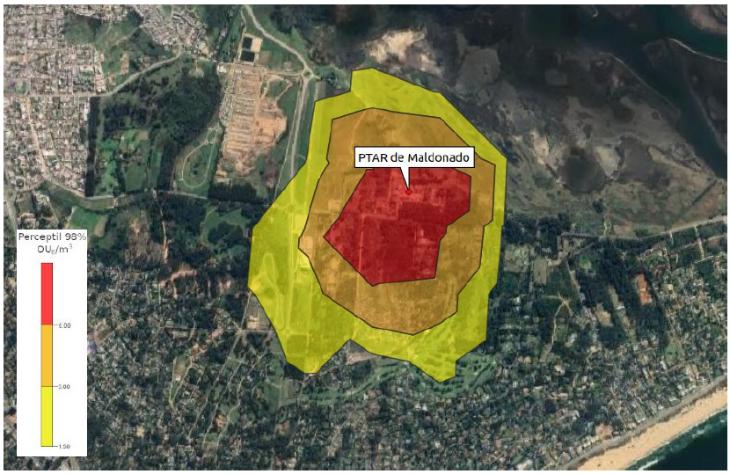
   The Jagüel wastewater treatment plant in Punta del Este, Uruguay, conducted an extensive study to address odor issues ahead of its renovation. Corrective actions significantly reduced odors, with no complaints reported during the summer.

   Through field measurements and advanced modeling, improvements such as enhanced ventilation in centrifuge rooms, activated carbon filters, and ClFe3 dosing in sludge were implemented, ensuring the system's effective performance.

A. Irigoyen 1*, D. Berger 1, A. Anton 2 &  C. Diaz 2

1 CIEMSA, Uruguay.
2 Ambiente et Odora S.L., Spain
* Airigoyen@ciemsa.com.uy

There is no translation available.

   The GRAL Dispersion Model/GUI has been updated to version 24.11, with several new features and critical bug fixes. This release brings enhancements designed to improve user experience and functionality.

   The high-resolution model system GRAMM/GRAL, developed at the Institute of Thermodynamics and Sustainable Propulsion Systems at Graz University of Technology, has become a benchmark for dispersion modelling in urban areas, both in scientific research, as well as in regulatory assessments. The model is especially suitable for low-wind speed conditions and complex terrain. An integrated micro-scale flow-field model takes the effect of buildings on pollutant dispersion into account. A new version of this system has been released with the following features:

Więcej artykułów…

All the content here under Creative Commons license