
There is no translation available.
Meteorological Eulerian models like WRF, combined with Gaussian and Lagrangian dispersion models, are commonly used to assess odor impact from emissions measured by dynamic olfactometry, with four specific models (PMSS, GRAL, CALMET/CALPUFF, and AERMOD) tested for performance evaluation.
The choice of model must be tailored to the specific environmental conditions, source characteristics and project objectives, so no one model is universally superior to others. This nuanced understanding of model applicability is vital to the effectiveness of odor management strategies in various environments, including urban and industrial settings.
R. Cerdá1*, O. Carter2, C. Dupuis3, L. Ricolleau3, C. Pozzi4, D. Valiño1
1 SUEZ SMART ENVIRONMENTAL SOLUTIONS, Spain
2 SUEZ ADVANCED SOLUTIONS UK,
3 ARIA TECHNOLOGIES – SUEZ Air & Climate, France
4ARIANET – SUEZ Air & Climate, Italy
 The present work is a joint venture project conducted by the Uruguayan Technological Laboratory (LATU), the National Directorate of the Environment (DINAMA) and the Río Negro’s local government. It consists on the application of different methodologies to address the problem generated by the presence of unpleasant odours in Fray Bentos, Uruguay.
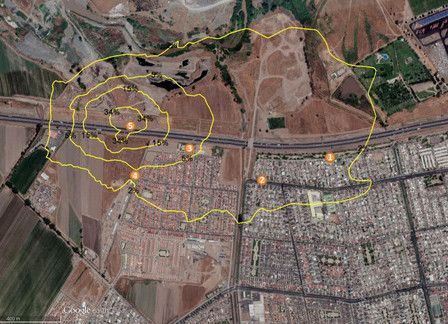 Approximately 50% of the wastewater from the "big Santiago" (Santiago Metropolitan Region, Chile) converges into the Chamber of Mixing and Distribution of Wastewater - CAM04 to be later conducted towards the Mapocho Trebal Sewage Treatment Plant.