There is no translation available.

foto2  In December 2006, Olores.org visited the facilities of St Croix Sensory in Lake Elmo, Minnesota, USA.  St. Croix Sensory is a sensory testing and training company that specializes in odor testing of air samples, commercial products, and materials and in training of odor assessors, monitors, inspectors, and investigators. Likewise, St. Croix Sensory manufactures state-of-the-art odor sampling and odor measurement equipment. Their products set the standard in odor sampling, testing, and measurement.

  In December 2006 we paid a visit to this firm to know a little bit more about their activities. During this visit, we could have a look to the process of manufacturing the olfactometer AC´Scent. The AC´Scent olfactometer has incorporated its own fresh air pump device with a special filter to assure you get an odorless air for testing, this is a special feature that makes the difference with other olfactometers in the market which usually come with no pump incorporated. Other devices might be smaller but at the end you need to acquire also an air pump and active carbon filters.
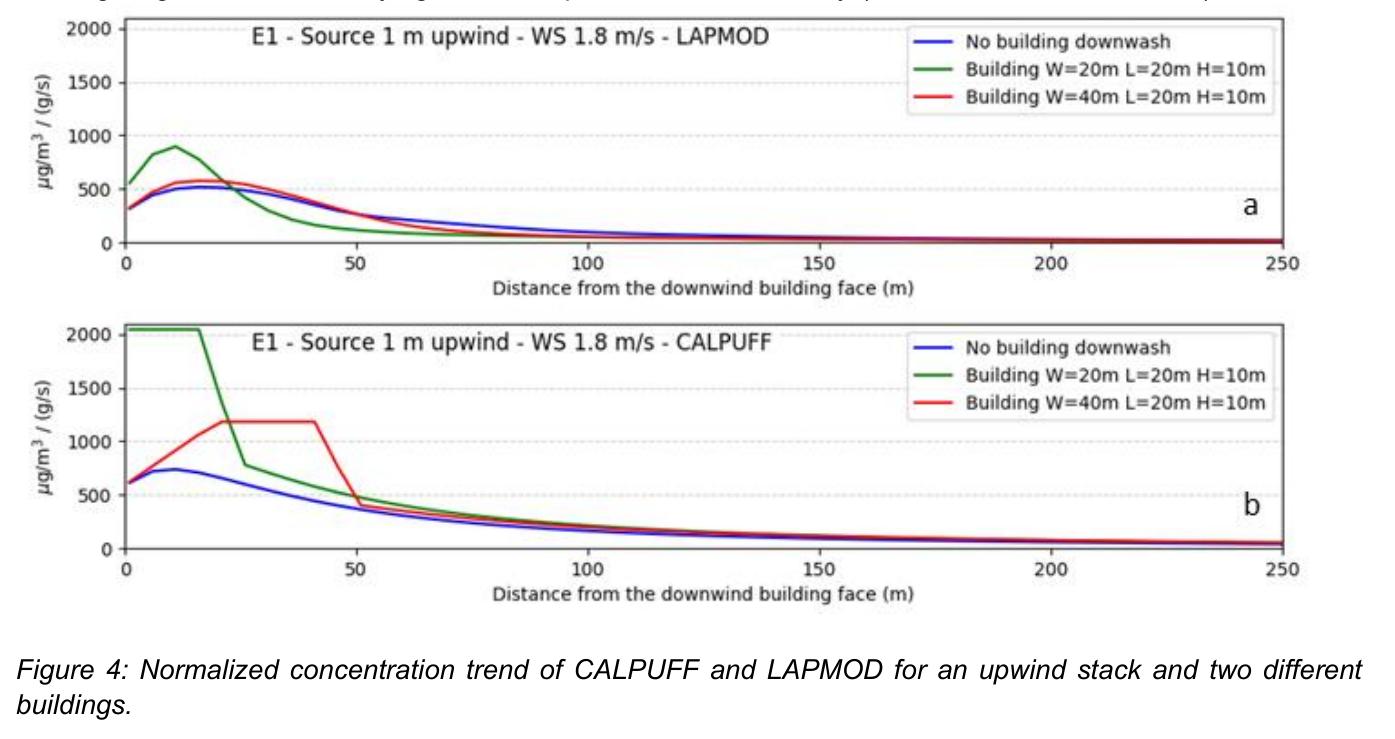

   Le modèle de particules lagrangien open source LAPMOD intègre désormais l'effet de courant descendant des bâtiments dans son algorithme grâce à PRIME2. Conçu spécialement pour les odeurs, il traite le courant descendant au niveau des particules pour les sources ponctuelles, surfaciques et volumétriques, rend superflue la prétraitement BPIP et évite les cavités à « concentration constante » peu réalistes pouvant apparaître avec des schémas plus anciens.

   Les impacts olfactifs sont principalement déterminés par ce qui se passe dans les premières dizaines, voire centaines, de mètres autour de la source. Dans ce champ proche, les bâtiments peuvent forcer les panaches vers le bas, accentuer la turbulence et créer des zones de recirculation qui affectent fortement les concentrations au niveau du sol au niveau des récepteurs voisins. Si un modèle de dispersion se trompe sur le sillage des bâtiments, il peut facilement sous-estimer ou surestimer les concentrations mêmes qui déterminent si les riverains se plaignent ou non. Le choix du schéma de courant descendant est donc crucial pour les évaluations olfactives autour des stations d’épuration, des installations de compostage, des sites de transformation alimentaire et d’autres installations à la configuration complexe.

There is no translation available.

   Scentroid has introduced several improvements to its SIMS3 platform, enhancing the accuracy of emission plume visualization, integrating new monitoring hardware, and refining analytical tools for more robust odour event assessment. These updates aim to provide more reliable representations of atmospheric dispersion patterns and improve data interpretation in environmental monitoring applications.

   Recent developments in the Scentroid SIMS3 system focus on upgrading how emission plumes are modelled and displayed. The standard heatmap representation has been replaced by a custom visualization engine that ensures higher spatial resolution and stability at all zoom levels. This modification eliminates clustering effects common in dense measurement networks and provides better definition near emission sources, particularly under variable meteorological conditions. The result is a more consistent and realistic depiction of dispersion dynamics, improving the interpretation of odour and pollutant transport in complex environments.

Plus d'articles...

All the content here under Creative Commons license