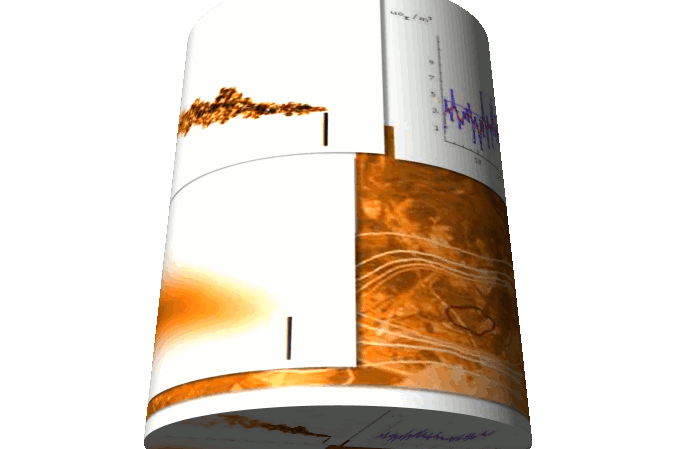
 Some guidelines are necessary to help environmental managers of industrial plants and environmental technicians of Environmental Regulatory offices in order to avoid mistakes when choosing dispersion modelling software.
Diaz C.1; Cartelle D.2 and Barclay J.3
(1) SVPA, Gerena, Spain (2) Troposfera, Ferrol, Spain (3) independent consultant, Auckland, New Zealand
Corresponding author: carlosdiaz@olores.org
Competing interests: The author has declared that no competing interests exist.
Academic editor: Carlos N Díaz.
Content quality: This paper has been peer reviewed by at least two reviewers. See scientific committee here
Citation:Diaz C., Cartelle D., Barclay J., 2014, Revision of Regulatory Dispersion Models, an Important Key in Environmental Odour Management, Ist International Seminar of Odours in the Environment, Santiago, Chile, www.olores.org
Copyright: 2014 olores.org. Open Content Creative Commons license., It is allowed to download, reuse, reprint, modify, distribute, and/or copy articles in olores.org website, as long as the original authors and source are cited. No permission is required from the authors or the publishers.
Keywords: subhourly data, topography, average time, peak to mean relation, calm and light winds
Acronyms: APGNO: Activity that may Potentially Generate Nuisance by Odours, IEA: Integrated Environmental Authorisation, AAE: Authorisation for Atmospheric Emissions, EIA: Environmental Impact Assessment, FB: Fractional Bias; NMSE Normalised Mean Square Error; GM Geometric Mean Bias, WWTP: Waste water Treatment Plant.
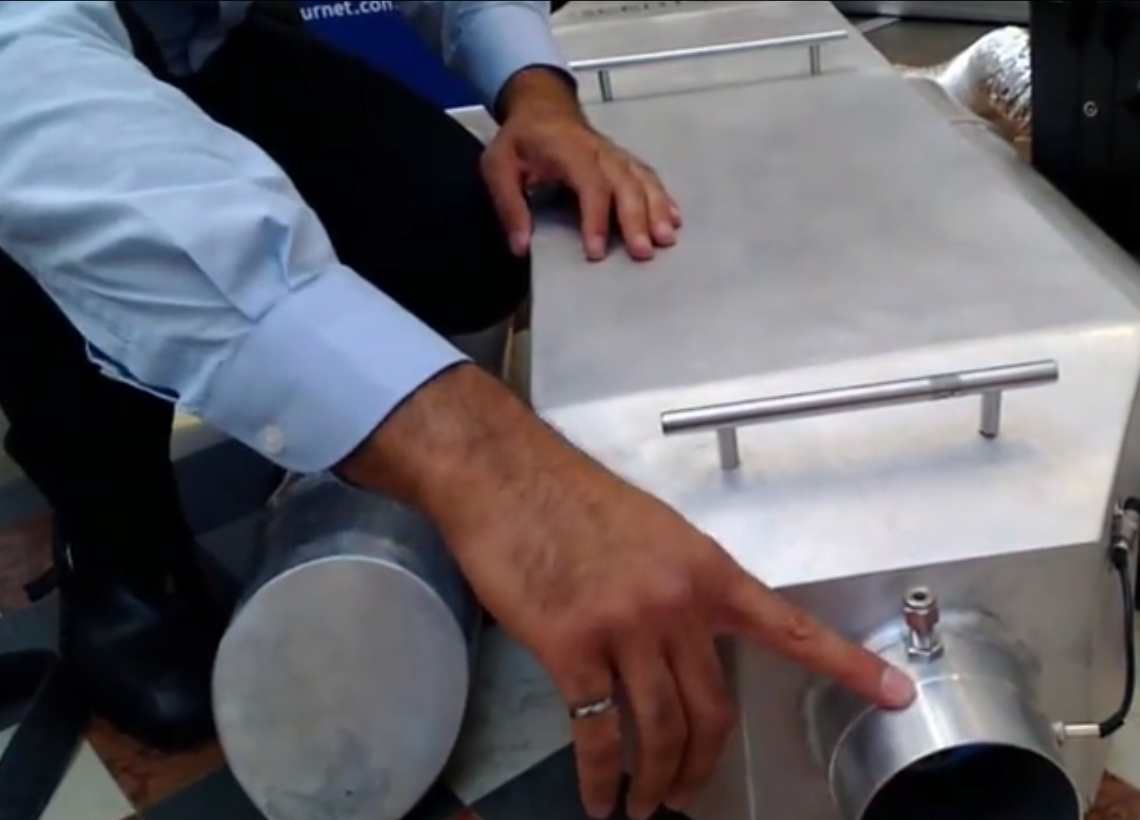 Scentroid, a very active Canadian manufacturer has presented in the recent NOSE 2014 in Venice their new wind tunnel, the SW60. This very light weight wind tunnel for sampling odours is made of aluminium/composite panels and it has a coating inside of PTFE. In addition, the wind tunnel comes with an internal air supply and tubing with an internal rechargeable battery to do the surface sampling in passive sources easier.
 The management of odours caused by industrial emissions requires standarized and technically-proved methodologies for a correct diagnosis, allowing to assess the problem objectively and, therefore, for proposing the best solutions from an economical and technical point of view.