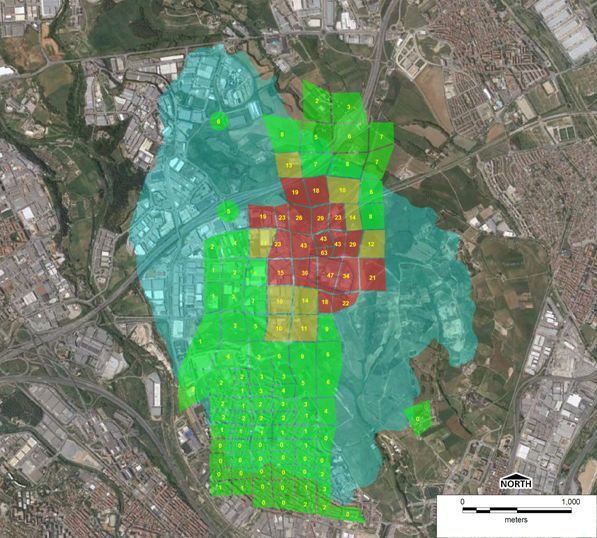
 The use of general purpose steady state Gaussian models (e.g. AERMOD) for predicting Odour exposure levels around the vicinity of an industrial site has been considered an accepted practice for many countries around the world for more than a decade now.
Murguia Walter1, Pagans Estel·la2, Heike Hauschildt3
1. Odournet México, Jardines de Madrid 7622, Monterrey, México. wmurguia@odournet.com T. +52 (55) 5677 1319
2. Odournet SL, Parc de Recerca UAB · Edificio Eureka, Barcelona, Spain.
3. Odournet Gmbh, Frauenhoferstr. 13, Kiel, Germany.
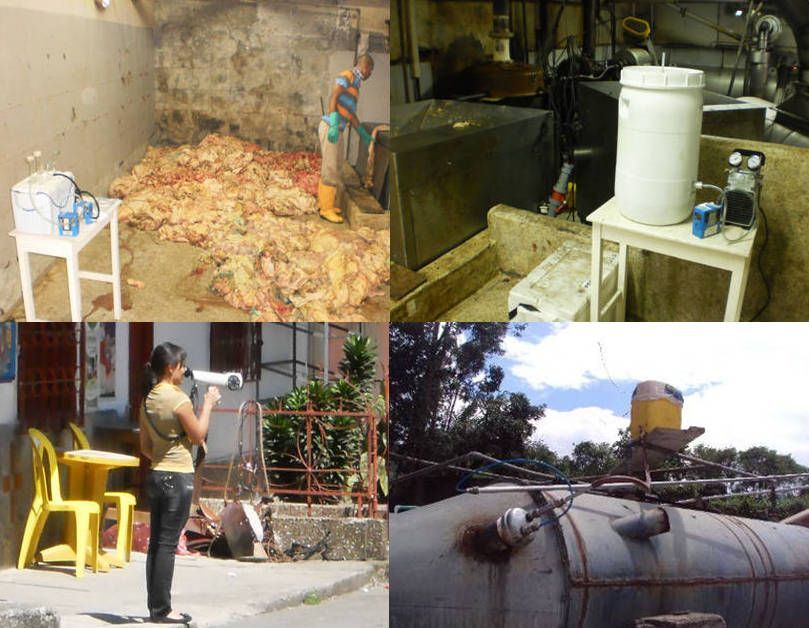 Ospina Grasas y Pieles Ltda, dedicated to the use of by-products of cattle farm near Medellin Colombia, has been impacting for the last 30 years the surrounding communities due to offensive odors. According to preventive measures imposed by the Metropolitan Area of the Aburrá Valley, environmental authority responsible for verifying compliance with environmental standards in the area, the plant closure was ordered.
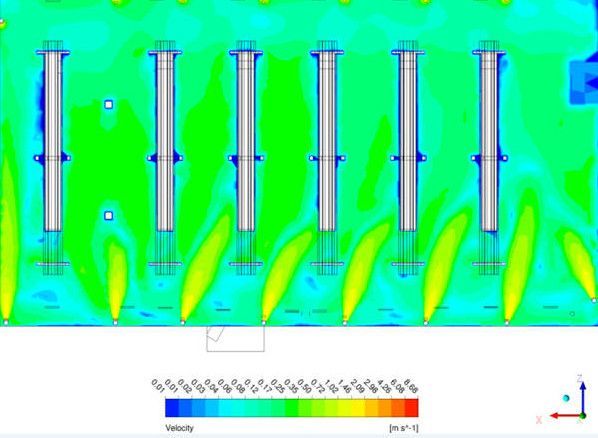 The industrial activity of waste water treatment plants (WWTPs) can be potentially odorous, causing important nuisances to the population living in the surroundings. Modern facilities are designed in order to avoid these problems, considering, for example, enclosed sources.