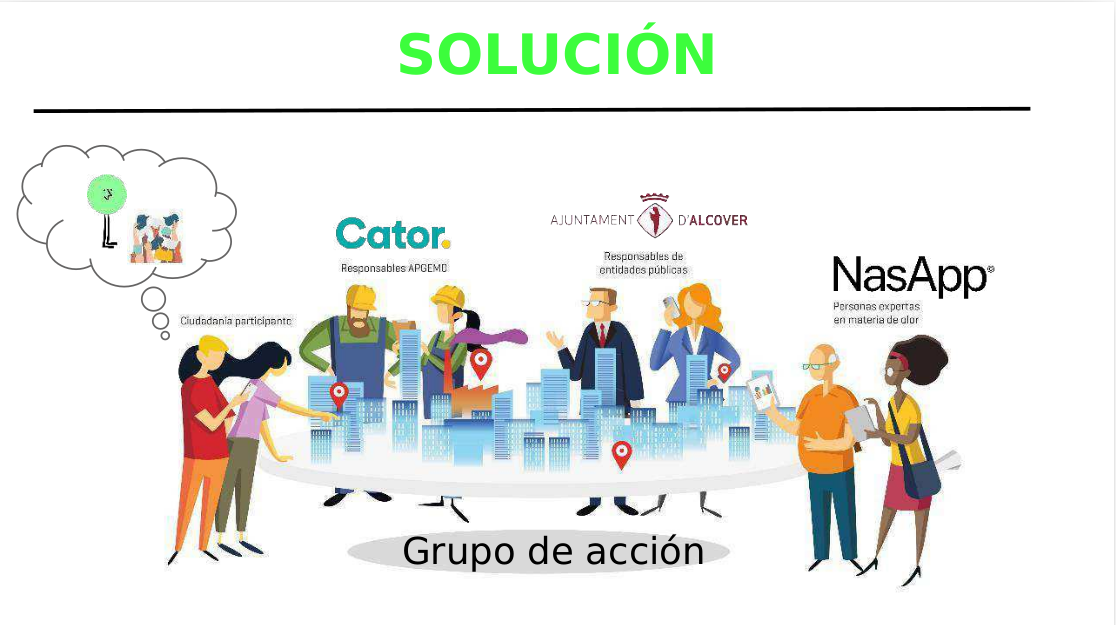
This project developed a methodology using the NASAPP web platform to monitor and analyze odor pollution from a waste management plant in a residential area.
By combining trained-user data with public participation and advanced analysis, it created an odor impact index and facilitated transparent stakeholder communication. The approach reduced odor complaints by 80% and established a replicable model for environmental conflict resolution, emphasizing community-company-authority collaboration.
de Lucas, I. 1*; Vallse, T. 2; Ribasése, E. 2
1 Centro Tecnológico Eurecat & NasApp SL, Catalonia, Spain.
2 Catalana de Tractament d'Olis Residuals S.A, Catalonia, Spain.
* Isabel.delucas@nasapp.org
Competing interests: The author has declared that no competing interests exist.
Academic editor: Carlos N Díaz.
Content quality: This paper has not been peer-reviewed.
Citation: de Lucas. I, Vallse. T, Ribasése. E, 2024, Evaluation of the Impact of a Waste Management Activity in a Residential Area by Monitoring Foul Odor Episodes with Nasapp, ODORA24 Conference, Barakaldo, Spain, www.olores.org.
Copyright: 2024 Olores.org. Open Content Creative Commons licence. It is allowed to download, reuse, reprint, modify, distribute, and/or copy articles in Olores.org website, as long as the original authors and source are cited. No permission is required from the authors or the publishers.
ISBN: pending.
Keywords: Odor episode, NASAPP web platform, Environmental impact, Stakeholder engagement
Abstract
This use case describes the development and implementation of a methodology to evaluate the impact of a waste management facility on a residential area, using odor episode monitoring via the NASAPP web platform.
Context: The project emerged to assess the environmental and social impact of a waste plant near a residential zone, specifically investigating links between plant operations and odor frequency/intensity.
Methodology:
- Data collection: Combined closed-group (30 trained users) and open-group participation, with NASAPP (implemented in 2012) streamlining data gathering since 1999.
- Data analysis: Identified odor patterns using weighting techniques to compare group data.
- Pollution assessment: Developed an odor pollution index incorporating factors like annoyance severity.
- Communication: Shared results via biannual meetings with local authorities, the waste company, and residents, supported by reports/maps.
Conclusions: The methodology achieved an 80% reduction in odor complaints through collaborative stakeholder engagement and NASAPP data. It became a model for similar environmental issues, promoting sustainable odor management.