The pulp industry faces challenges in balancing biological wastewater treatment with effective odor control.
SciCorp’s micronutrient technology, based on plant extracts, selectively stimulates specific bacteria within biological sludge to significantly reduce emissions of malodorous gases such as hydrogen sulfide and mercaptans. Additionally, this technology enhances the biological treatment performance by increasing load capacity, lowering phosphorus concentration in the treated effluent, and reducing biosolid production, thereby optimizing overall wastewater treatment plant efficiency.
D. Maat1, J. Soza2 & J. Nuñez3
Competing interests: The author has declared that no competing interests exist.
Academic editor: Carlos N. Díaz.
Content quality: This paper has been peer-reviewed by at least two reviewers. See scientific committee here.
Citation: D. Maat, J. Soza & J. Nuñez, 2025, Impact Of Micronutrient Technology In Odor Control Of Wastewater Treatment Plants Of Pulp Mills, OLORES25 Congress, Santiago, Chile, www.olores.org.
Copyright: 2025 Olores.org. Open Content Creative Commons licence. It is allowed to download, reuse, reprint, modify, distribute, and/or copy articles on Olores.org website, as long as the original authors and source are cited. No permission is required from the authors or the publishers.
ISBN: pending.
Keywords: Facultative bacteria, sulfur-reducing bacteria, selective biostimulation, industrial wastewater, malodorous emissions.
Abstract
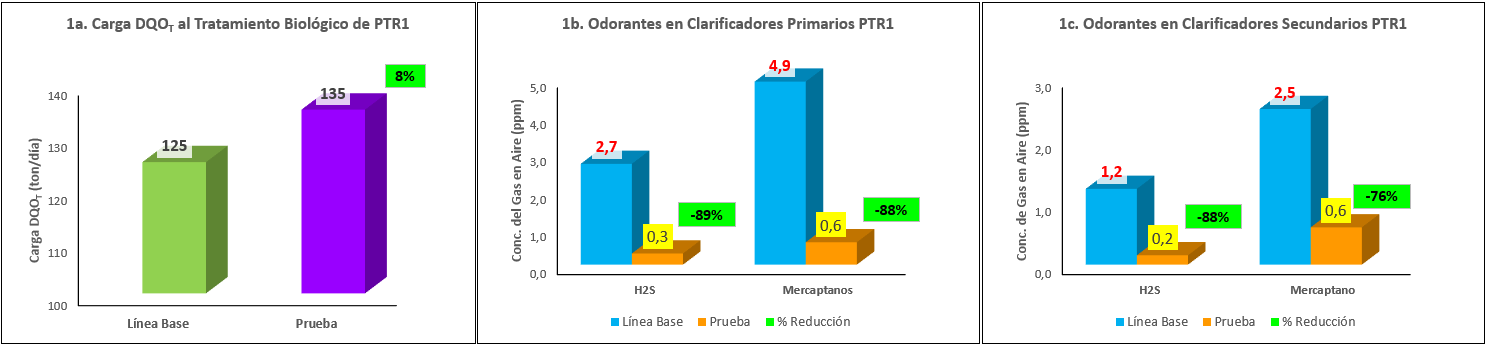
Nowadays, the sustainability of the cellulose industry poses great challenges in terms of balancing the operation with adequate control of environmental impacts, where the Effluent Treatment areas must find the balance between biologically treating the wastewater generated by the industrial process and preventing malodorous emissions that cause discomfort in neighbouring communities. CMPC Pulp together with the Canadian company SciCorp International, set out to determine the impact of the micronutrient technology, consisting of a liquid mixture of plant extracts that is added to the effluent, to reduce odour emissions, and additionally, to improve performance of the biological treatment of wastewater. SciCorp's micronutrient technology selectively stimulates facultative bacteria in the biological sludge to feed more actively and, creates conditions that limit the production of malodorous gases.The results obtained in different cellulose effluent treatment plants in Chile show a reduction of malodorous gases, such as H2S and mercaptans, between 54 – 91% with a product concentration of 2.9 ppm. Regarding biological treatment, data shows an increasing of load capacity between 9 and 12% without affecting the treatment, reduction of phosphorus concentration at the treated effluent of 38%, and the reduction of biosolids generated between 15 and 23%. In summary, the application of plant-based micronutrients represents an innovative method of reducing odour generated in biological processes and at the same time improving the performance of wastewater treatment plants.
See the full article in other languages:
- French
- Spanish
- German
- Polish
- Arabic