There is no translation available.
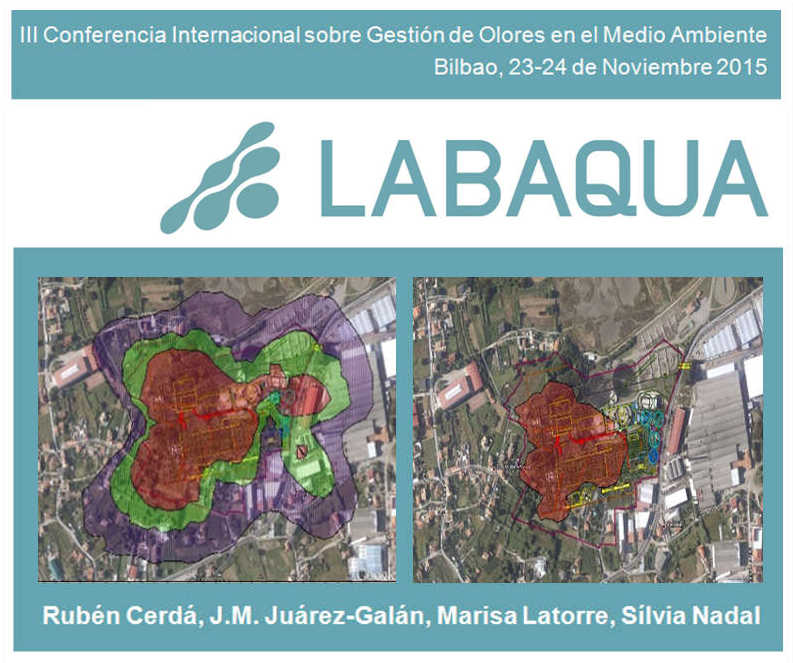 Any technological study focused to reduce the odour impact must be based in several steps: from an effective diagnosis, followed by modeling different treatment scenarios, and afterwards doing the Technical – Economic Evaluation (CAPEX / OPEX) of different corrective tecnologies.
In the present paper, it is explained the different steps of the study for two real cases.
Silvia Nadal 1*, Marisa Latorre 1, Rubén Cerdá 2 and J.M. Juarez-Galan 2
1. Sistemas y Tecnologías Ambientales S.A. C/Còrsega 112, local 1. 08029 Barcelona, Spain
2. Labaqua S.A. C/Dracma 16-18, Polígono Industrial Las Atalayas. 03114 Alicante, Spain.
* E-mail: snadal@sta-at.com
Tel.: +34 932 53 07 40
 This work presents the tools developed by the research group of Polytechnic University of Catalonia located in Manresa and its collaborators on the study of the bioprocesses for the treatment of gaseous and odorous flows.
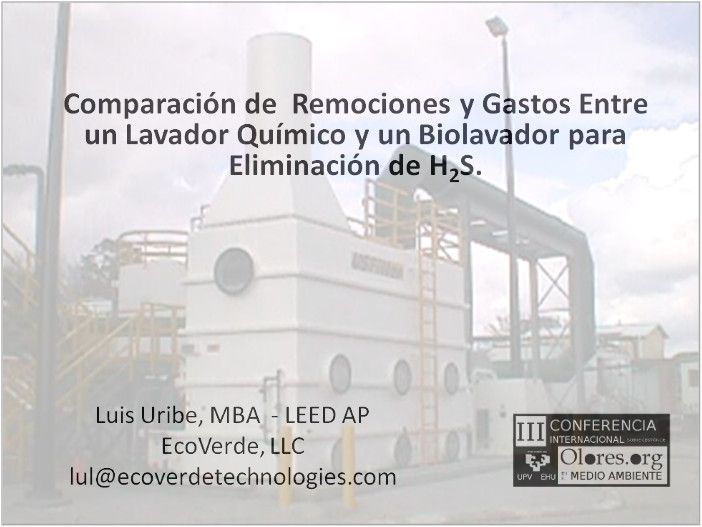 Biological odor control systems have proven to be one of the best alternatives in recent years. Their competitive advantage lies not only in its high removal efficiencies of odorous compounds, but also in their low operating and maintenance costs, compared to a chemical scrubber.