
There is no translation available.
Biogas is a very interesting source of renewable energy. However, its desulfurization is necessary, and sometimes an adjustment of the methane (CH4) concentration (upgrading), by reducing the carbon dioxide (CO2) concentration. The removal or capture of CO2 can be carried out by biological methods, with microalgae being the most used microorganisms, given their high CO2 assimilation capacity.
However, high CO2 concentrations inhibit the microalgae growth, which makes it difficult to apply. In the present study, a microalgae consortium of leachate from landfills has been isolated to study the effect of CO2 concentration on its growth. Two bubble column photobioreactors were built with an inner diameter of 100 mm and a working volume of 8 L.
Saldarriaga, L. F1,2, Ramírez, M.1, Almenglo, F., Gómez J.M, Cantero, D1
1 Departamento de Ingeniería Química y Tecnología de Alimento. Facultad de Ciencias. Universidad de Cádiz. Instituto Universitario de Investigación Vitivinícola y Agroalimentario (IVAGRO). Av. República Saharaui S/N. 11510 Puerto Real, Cádiz, Spain
2 Departamento de Química. Universidad del Atlántico. Km 8. Vía Puerto Colombia, Colombia.
* martin.ramirez@uca.es

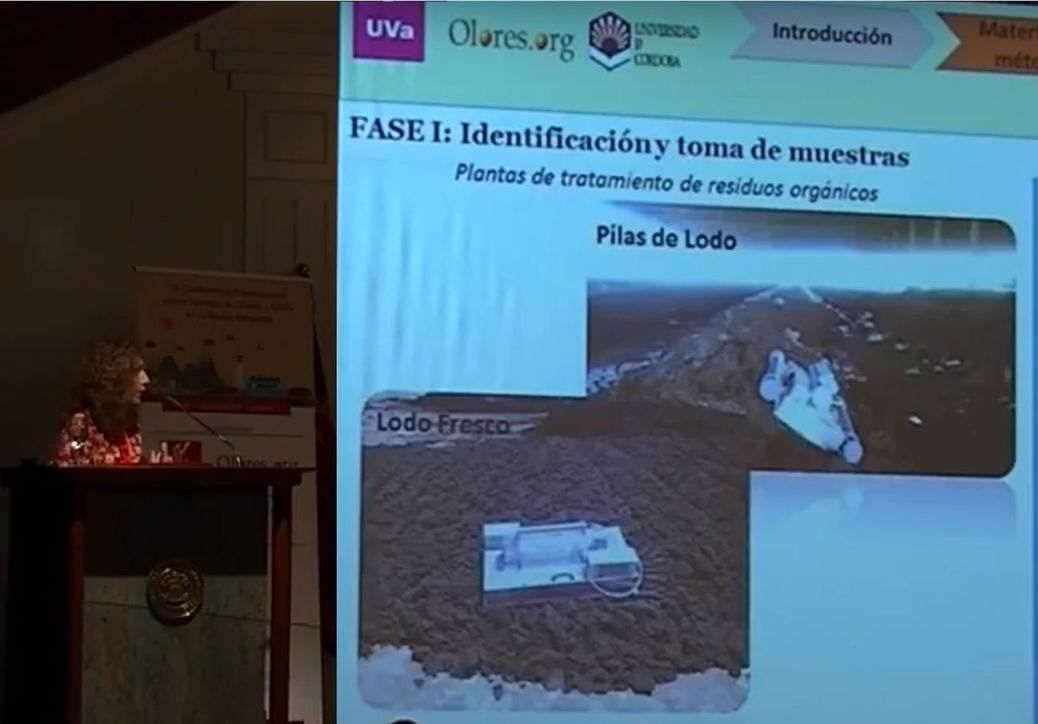 This study presents several results related to the odorous impact derived from organic waste treatment and management plants carried out by the research group. Different raw materials were selected to evaluate the odorous impact and its relationship with their physico-chemical characterization or operational variables. Statistical evaluation through Principal Component Analysis (PCA) groups the odor by its origin or raw material.