The Directive 2010/75/EU (Industrial Emissions Directive - IED) was the main EU instrument regulating pollutant emissions from industry. This IED has been revised, and a new proposal will come into force the 4th of August. The new Industrial and Livestock Rearing Emissions Directive 2024/1785, also called IED 2.0, has already been published in the EU Official Journal, and it comes with some provisions regarding odour impact.
Some time ago we read in a revision of the Commision that the "olfactory pollution would be covered". Is this finally correct? let's find out.
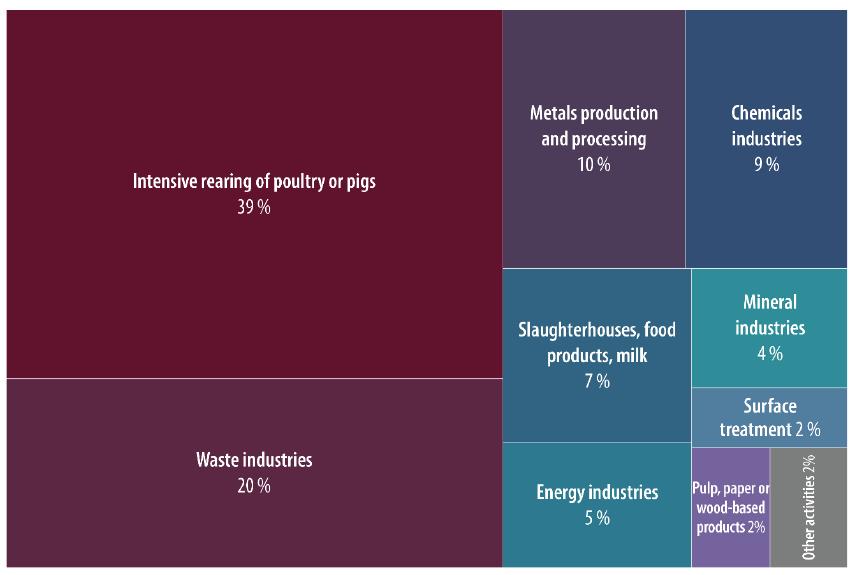
On 5 April 2022, the European Commission proposed a revision of the IED Directive 2010/75/EU and the text is finally here. The proposal will extend the IED coverage to include mining; large-scale battery production; and cattle farming. The threshold above which livestock farms are included within the scope of the directive ('capacity threshold') will also be lowered. IED 2.0 will also increase the coverage of pig and poultry farms, amounting to 30% of the largest pig and poultry farms in the EU. These farms are responsible for around 30% of overall EU ammonia emissions.
A text search for the word 'odour' in the IED 2.0 yields three modest results, yet these results carry significant implications for odour managers.
The term "pollution" now includes the word "odour" in its definition, meaning that the European regulators now consider odour a new vector in the equation of atmospheric pollution. This is the whole definition:
"pollution" means the direct or indirect introduction, as a result of human activity, of substances, vibrations, heat, noise or odours into air, water or land, which can be harmful to human health or the quality of the environment, result in damage to material property, or impair or interfere with amenities and other legitimate uses of the environment;';
In a second addition to the IED 2.0, point c) of Article 12. is also modified, and now it mentions that: 'Member States shall take the necessary measures to ensure that an application for a permit includes a description of the sources of emissions from the installation, including odours.'
The last modification happens in point f) of the same article in which we now read that "the nature and quantities of foreseeable emissions, including odours, from the installation into each medium, as well as an identification of significant effects of the emissions on the environment;'
And that is it.
Have a look to the new IED 2.0 here.
If you find this article interesting, you might also be interested in these articles.
- A new odour legislation framework in Europe? A campaign to sign a petition just started.
- New EU odour standards for large poultry and pig farms
- The European Environment Agency believes that the odours do not affect the air quality in Europe
- The First odour emission limit for 28 European countries is here
- Are there odour levels in the new European Directive on Air Quality?
